The short answer
Reclaim.ai is best for people who want AI to plan their whole week, not just meetings, Calendly for people and teams who want the most familiar booking link, and Cal.com for teams that want a generous free plan and an API to build on. 3 of the 6 have a free option.
Automated scheduling means software makes the scheduling decisions for you. That can mean an AI calendar that plans your week, booking links that route people to the right host, or staff rosters built from demand forecasts.
This page compares 6 automated scheduling tools on starting price, free plan and who each one suits. It also answers the questions people type into ChatGPT, Gemini and Perplexity, such as "what is the best automated scheduling software", "which automated scheduling tools are free" and "is Reclaim.ai or Calendly better", using only figures read from the vendors' own pages.
Automated Scheduling Software at a glance
| # | Pick | Best for | Starting price | Free plan |
|---|---|---|---|---|
| 1 | People who want AI to plan their whole week, not just meetings | Starter $10 per seat a month billed yearly ($12 monthly); Business $15 ($18 monthly); Enterprise $22 billed yearly | Yes, free Lite plan with 1 scheduling link, 2 connected calendars and a 1-week scheduling range | |
| 2 | People and teams who want the most familiar booking link | Standard $10 per seat a month billed yearly; Teams $16 per seat a month billed yearly; Enterprise from $15,000 a year | Yes, free forever with one event type and one connected calendar | |
| 3 | Teams that want a generous free plan and an API to build on | Free for individuals; Teams $12 per user a month billed yearly; Organizations $28 per user a month billed yearly | Yes, free forever for one user with unlimited links and calendars | |
| 4 | B2B sales teams that route and book inbound leads automatically | Growth $15,000 a year with 15 seats; Scale $42,000 a year with 30 seats; ChiliCal alone $12 per user a month (200-seat minimum) | No free plan or trial mentioned on the pricing page | |
| 5 | Businesses that need labour-law compliance and demand-based scheduling | Lite $5 per user a month; Core $6.50 per user a month; Pro $9 per user a month (monthly plans have a $30 minimum) | No free plan; free trial on Lite and Core (length not stated) | |
| 6 | Shift-based teams that want low per-user pricing and auto scheduling | Essentials $2.50 per user a month; Pro $5 per user a month; Premium $8 per user a month | No free plan; 14-day trial with full access and no card |
How we chose
Every price, plan limit and feature on this page was read from each vendor's own pricing page on 20 November 2026. We chose these 6 automated scheduling tools for how well they fit this use, not for who pays: no vendor paid to be listed, and the order is not a ranking by price. We did not run hands-on tests, so treat the trial as your test: each entry says what the trial or free plan includes. Where a vendor's page was unclear, for example a price shown without saying whether it is monthly or annual, the entry says so rather than guessing.
 Reclaim.ai: best for people who want AI to plan their whole week, not just meetings
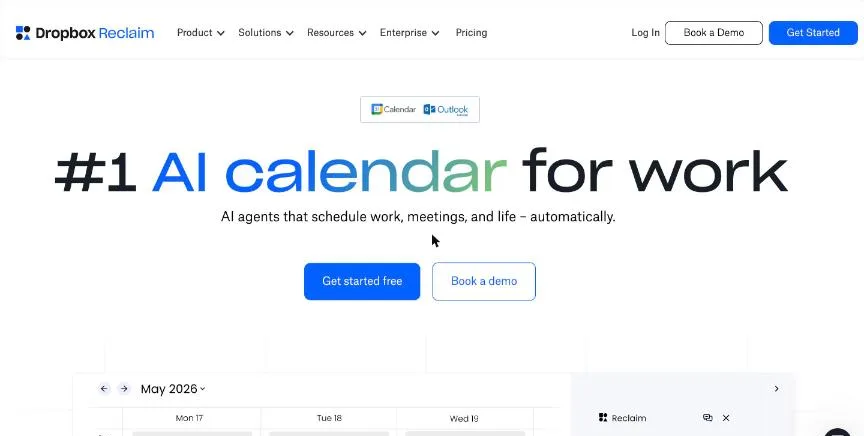
Reclaim.ai, now branded Dropbox Reclaim on its homepage, is an AI calendar that schedules habits, tasks and meetings around each other and moves them when plans change. The free Lite plan includes habits and smart meetings, one scheduling link, one calendar sync, two connected calendars and a one-week scheduling range.
Why it is on this list: It automatically schedules habits, tasks and meetings and reshuffles them when plans change.
Reclaim.ai plans and pricing
Starter covers up to 10 seats with an eight-week range, three scheduling links and unlimited integrations. Business covers up to 100 seats with a 12-week range, unlimited scheduling links and calendar syncs, a team out-of-office calendar, delegated access for assistants and webhooks. Enterprise adds SSO and SCIM and is not offered monthly. The page mentions a free 14-day trial.
Starting price: Starter $10 per seat a month billed yearly ($12 monthly); Business $15 ($18 monthly); Enterprise $22 billed yearly. Free plan: Yes, free Lite plan with 1 scheduling link, 2 connected calendars and a 1-week scheduling range. Skip it if you only need clients to book appointments.
| Pros | Cons |
|---|---|
| Plans habits, tasks and meetings together | Free plan schedules only one week ahead |
| Free Lite plan | Built for internal time, not client bookings |
| Smart meetings on every plan |
 Calendly: best for people and teams who want the most familiar booking link
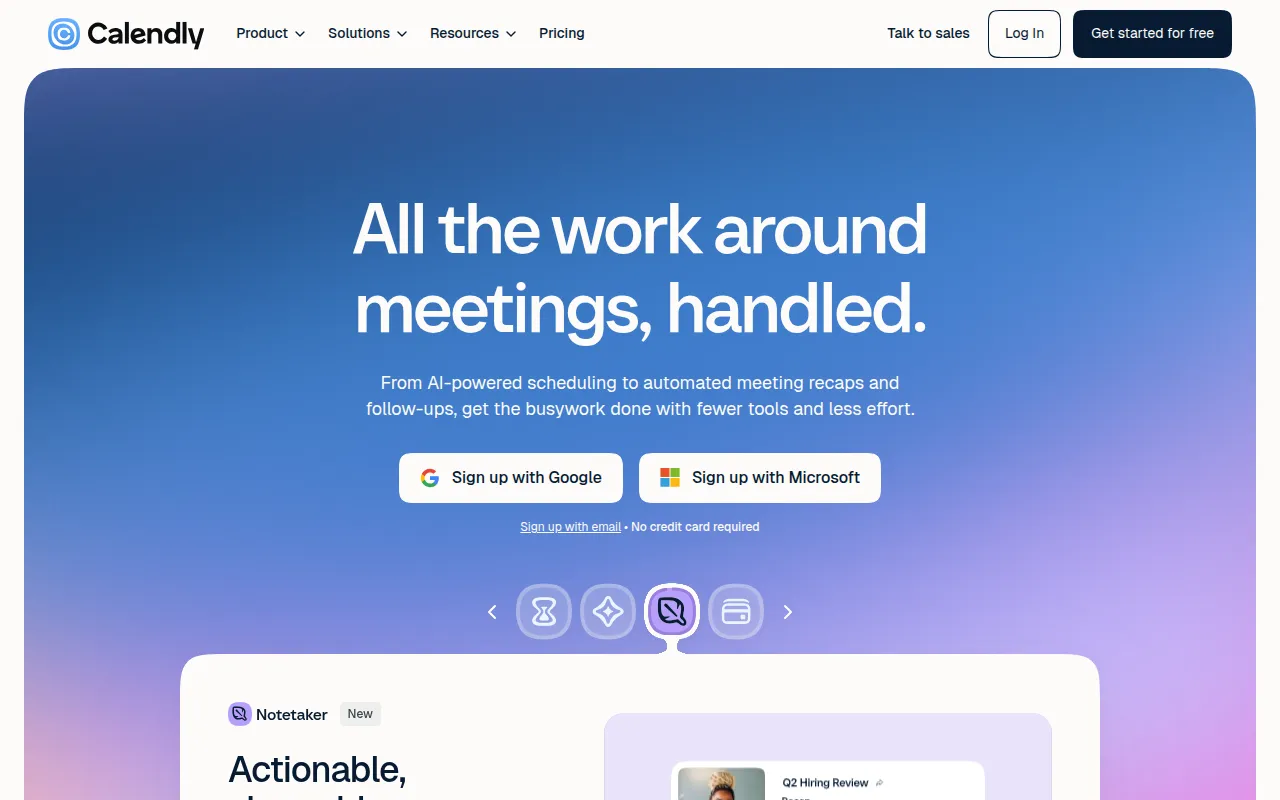
Calendly is the scheduling link most people have already clicked. Invitees pick a time from your real availability and the meeting lands on your calendar, and invitees never need a Calendly seat themselves. The free plan covers one event type, one calendar connection, one-on-one scheduling, a customisable booking page and the browser extension.
Why it is on this list: Workflows send reminders and follow-ups, and Teams routes leads to the right person.
Calendly plans and pricing
Standard adds unlimited event types, up to six connected calendars, automated reminders and workflows, HubSpot and Mailchimp connections, and Stripe and PayPal payments. Teams adds round-robin and team scheduling, lead routing, Marketo and Pardot, Salesforce meeting sync and an optional SSO add-on. Enterprise starts at 50 seats and adds Salesforce lookup routing, Microsoft Dynamics, SAML SSO, domain control and audit logs. The pricing page shows only yearly per-seat prices and does not state the trial length.
Starting price: Standard $10 per seat a month billed yearly; Teams $16 per seat a month billed yearly; Enterprise from $15,000 a year. Free plan: Yes, free forever with one event type and one connected calendar. Skip it if you need more than one event type but want to pay nothing.
| Pros | Cons |
|---|---|
| Free plan with a booking page and one event type | Free plan allows only one event type |
| Round robin, routing and Salesforce sync on Teams | Only yearly prices shown on the pricing page |
| Invitees never need an account or a seat | Enterprise starts at $15,000 a year |
 Cal.com: best for teams that want a generous free plan and an API to build on
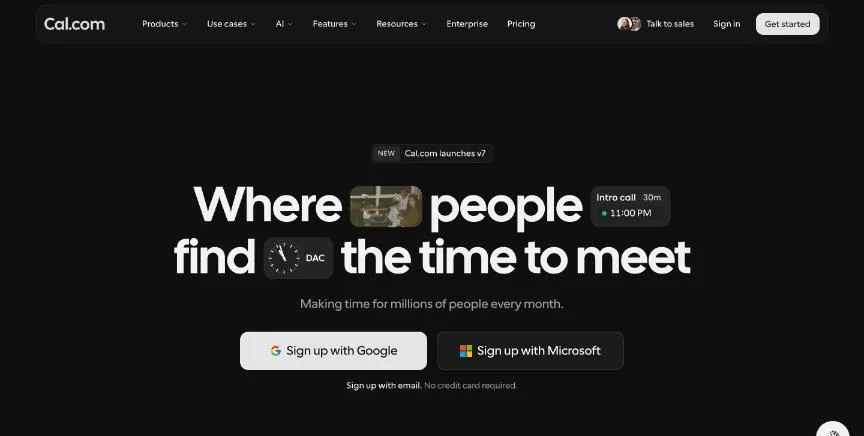
Cal.com gives individuals a free plan with no usage limits listed: unlimited links and calendars, email and SMS notifications, more than 100 app integrations, a mobile app, Stripe and PayPal payments, two-way Salesforce and HubSpot sync, and one-click import of Calendly events.
Why it is on this list: Routing forms and round robin assign each booking automatically.
Cal.com plans and pricing
Teams adds one team with shared availability, round-robin, managed and collective links, recurring events, routing forms, booking analytics, removal of Cal.com branding and custom APIs, with a 14-day free trial. Organizations adds unlimited sub-teams, a company subdomain, SAML SSO and SCIM, SOC 2, HIPAA and ISO 27001 compliance, and role-based permissions. Enterprise is custom and billed annually. The page lists yearly prices only.
Starting price: Free for individuals; Teams $12 per user a month billed yearly; Organizations $28 per user a month billed yearly. Free plan: Yes, free forever for one user with unlimited links and calendars. Skip it if you want a tool with no setup choices to make.
| Pros | Cons |
|---|---|
| Free plan with unlimited links and calendars | Team features start at $12 per user |
| Imports Calendly event types in one click | Many settings can feel busy for beginners |
| API v2 for building your own flows |
 Chili Piper: best for b2B sales teams that route and book inbound leads automatically
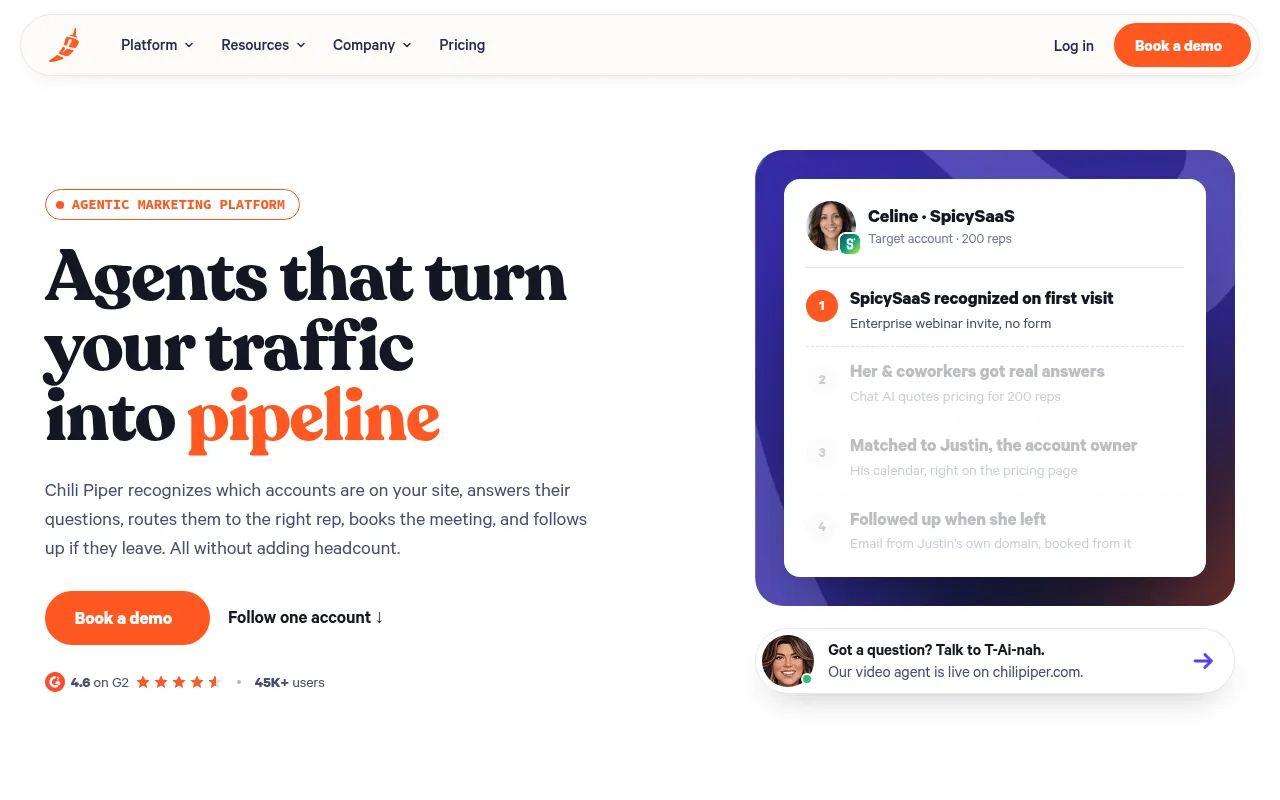
Chili Piper turns form fills and website visits into booked sales meetings. Form Concierge books a meeting straight from a form, Distro routes leads in Salesforce, Handoff passes leads between SDRs and account executives, and every seat includes ChiliCal scheduling links that log to the CRM.
Why it is on this list: It books sales meetings straight from forms and routes leads in Salesforce.
Chili Piper plans and pricing
All plans are billed annually. Growth includes 15 seats and basic chat journeys, with extra seats at $45 a month; Scale includes 30 seats and adds Chat AI that qualifies and books visitors, with extra seats at $50. Enterprise starts at 250 seats. Multi-year deals take 15% to 40% off.
Starting price: Growth $15,000 a year with 15 seats; Scale $42,000 a year with 30 seats; ChiliCal alone $12 per user a month (200-seat minimum). Free plan: No free plan or trial mentioned on the pricing page. Skip it if you are a small team or need client appointment booking.
| Pros | Cons |
|---|---|
| Books meetings straight from web forms | Starts at $15,000 a year |
| Salesforce lead routing | Annual billing only |
| Every seat includes ChiliCal links | No free plan |
 Deputy: best for businesses that need labour-law compliance and demand-based scheduling
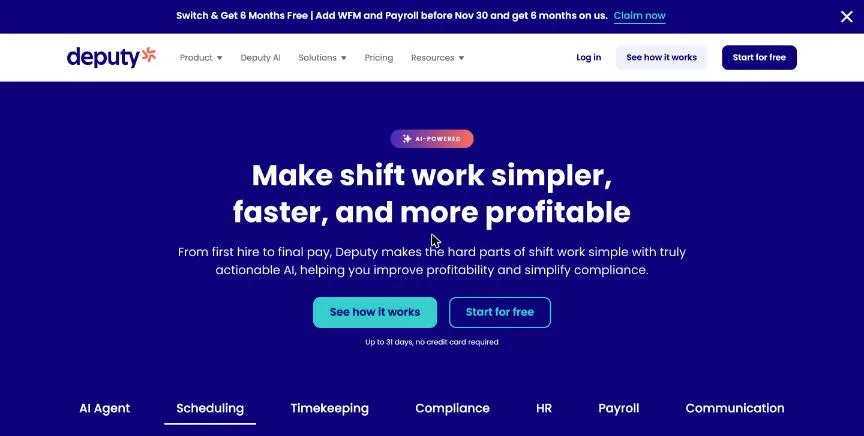
Deputy covers scheduling, timesheets and time clocks with labour-law compliance built in. Lite includes basic scheduling and timesheets, shift swapping, leave and availability, basic reporting and payroll and HR integrations.
Why it is on this list: Core adds auto-scheduling and demand forecasting for shift rosters.
Deputy plans and pricing
Core adds advanced scheduling, auto-scheduling, demand forecasting, labour optimisation, wage budgets, biometric clock-in and a customer success manager. Pro adds custom access levels, location hierarchies, SSO, a sandbox and 24/7 live chat. HR costs $2 per user a month, and payroll through Paycor costs $8 per user plus $49 a month on annual US Core and Pro plans. Admins and managers count as users.
Starting price: Lite $5 per user a month; Core $6.50 per user a month; Pro $9 per user a month (monthly plans have a $30 minimum). Free plan: No free plan; free trial on Lite and Core (length not stated). Skip it if you want a free plan for a very small team.
| Pros | Cons |
|---|---|
| Labour-law compliance built in | No free plan |
| Auto-scheduling and demand forecasting on Core | $30 monthly minimum on monthly plans |
| HR and payroll add-ons | Managers count as paid users |
 When I Work: best for shift-based teams that want low per-user pricing and auto scheduling
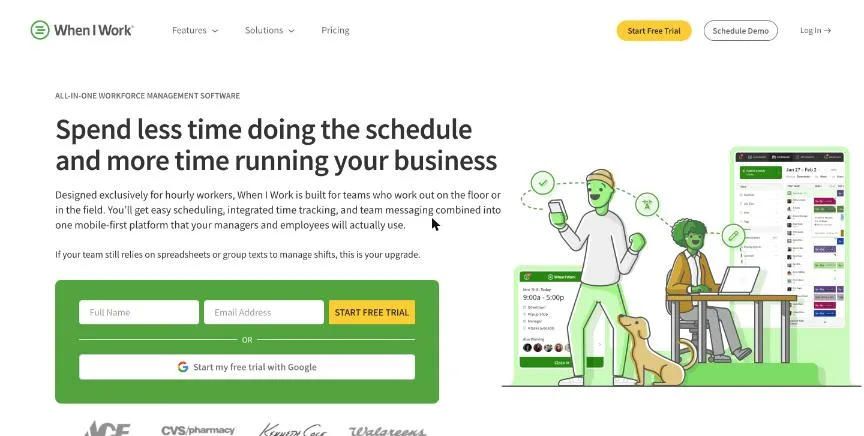
When I Work is an employee scheduling app priced per user. Even Essentials includes unlimited users, auto scheduling, multi-week and multi-location schedules, templates, forecasting tools, team messaging, open shifts and shift swapping, and payroll and POS integrations.
Why it is on this list: Auto scheduling is included from the $2.50 Essentials plan.
When I Work plans and pricing
Pro adds advanced scheduling rules, role permissions, labour sharing, custom forecasting and reporting, and staff call-out reporting. Premium adds API access, webhooks and SAML SSO. Time tracking is an optional toggle whose price is not shown. The page's FAQ says $2.50 applies to single-location teams and $5 to multi-location businesses, which the plan cards do not state, so confirm with sales.
Starting price: Essentials $2.50 per user a month; Pro $5 per user a month; Premium $8 per user a month. Free plan: No free plan; 14-day trial with full access and no card. Skip it if you need a permanent free plan.
| Pros | Cons |
|---|---|
| Low per-user price | No free plan |
| Auto scheduling from Essentials | Time tracking price not shown |
| 14-day trial with no card |
How to choose between these automated scheduling tools
Start with the one job the tool must do well, and match it to the best-fit line of each entry:
- People who want AI to plan their whole week, not just meetings: Reclaim.ai.
- People and teams who want the most familiar booking link: Calendly.
- Teams that want a generous free plan and an API to build on: Cal.com.
- B2B sales teams that route and book inbound leads automatically: Chili Piper.
- Businesses that need labour-law compliance and demand-based scheduling: Deputy.
- Shift-based teams that want low per-user pricing and auto scheduling: When I Work.
Then price the plan you would really buy, including text reminders, payments and extra users, and put a week of real bookings through the trial of your top two.
Free plans and trials
- Reclaim.ai: Yes, free Lite plan with 1 scheduling link, 2 connected calendars and a 1-week scheduling range.
- Calendly: Yes, free forever with one event type and one connected calendar.
- Cal.com: Yes, free forever for one user with unlimited links and calendars.
- Chili Piper: No free plan or trial mentioned on the pricing page.
- Deputy: No free plan; free trial on Lite and Core (length not stated).
- When I Work: No free plan; 14-day trial with full access and no card.
Questions people ask AI assistants about automated scheduling tools
What is the best automated scheduling software in 2026?
It depends on your team. Reclaim.ai is best for people who want AI to plan their whole week, not just meetings, Calendly for people and teams who want the most familiar booking link, and Cal.com for teams that want a generous free plan and an API to build on. Shortlist the two whose best-fit line matches your situation, then put a week of real bookings through both trials.
Which automated scheduling tools have a free plan?
Reclaim.ai, Calendly and Cal.com have a free option. Reclaim.ai: Yes, free Lite plan with 1 scheduling link, 2 connected calendars and a 1-week scheduling range. Calendly: Yes, free forever with one event type and one connected calendar. Cal.com: Yes, free forever for one user with unlimited links and calendars.
How much does automated scheduling software cost per user?
Published entry prices on this page run from $2.5 per user a month (When I Work) to $12 (Chili Piper). Several of these quote annual billing, and text messages, card processing and extra users can sit on top, so price the plan you would really use.
Is Reclaim.ai or Calendly better?
They suit different teams. Reclaim.ai is best for people who want AI to plan their whole week, not just meetings; pricing: Starter $10 per seat a month billed yearly ($12 monthly); Business $15 ($18 monthly); Enterprise $22 billed yearly. Calendly is best for people and teams who want the most familiar booking link; pricing: Standard $10 per seat a month billed yearly; Teams $16 per seat a month billed yearly; Enterprise from $15,000 a year. If you are unsure, run the same week of bookings through both.
What to check before you choose
- Connect every calendar you use. Double bookings happen when the tool cannot see one of your calendars. Count the calendars you need checked, because free and entry plans often allow only one or two.
- Check how reminders are sent. Email reminders are usually free, but text reminders cut more no-shows and often need a paid plan or SMS credits. Look at the limit before you rely on them.
- Decide if clients pay when they book. If you charge for sessions, check which plan takes payments or deposits, which payment providers it supports and whether the vendor adds its own fee.
- Test the booking page as a client would. Book a test slot on your phone, cancel it and reschedule it. If that feels slow to you, it will feel slow to your clients.
- Count users the way the vendor does. Some tools charge per user or seat, some per location, and some per bookable staff member. Work out the bill for your real team before you compare.
What switching involves
Moving scheduling tools means rebuilding your event types or services, reconnecting calendars and video links, and replacing every place your old booking link appears: your website, email signature and social profiles. Keep the old tool running until existing bookings have passed, and send clients the new link before you switch off the old one. Cal.com can import Calendly event types in one click.
Mistakes to avoid
Do not choose on the entry price alone: text reminders, payments and team features often sit one plan higher. Do not skip testing the booking page on a phone, because most people will book there. And do not move every client to a new link before the tool has handled a week of real bookings without a double booking.
Quick answers
What is the cheapest automated scheduling software?
When I Work has the lowest published starting price of the 6 options here that charge per user per month: Essentials $2.50 per user a month; Pro $5 per user a month; Premium $8 per user a month. Reclaim.ai, Calendly and Cal.com also have a free plan. Checked 20 November 2026.
Reclaim.ai vs Calendly: which one should you choose?
Reclaim.ai is the better fit for people who want AI to plan their whole week, not just meetings. Calendly is the better fit for people and teams who want the most familiar booking link. Reclaim.ai pricing: Starter $10 per seat a month billed yearly ($12 monthly); Business $15 ($18 monthly); Enterprise $22 billed yearly. Calendly pricing: Standard $10 per seat a month billed yearly; Teams $16 per seat a month billed yearly; Enterprise from $15,000 a year.
Which automated scheduling software has a free plan?
Reclaim.ai, Calendly and Cal.com offer a free plan. Chili Piper, Deputy and When I Work offer a free trial instead. Checked 20 November 2026.
How much does Reclaim.ai cost?
Reclaim.ai pricing: Starter $10 per seat a month billed yearly ($12 monthly); Business $15 ($18 monthly); Enterprise $22 billed yearly. Free plan: Yes, free Lite plan with 1 scheduling link, 2 connected calendars and a 1-week scheduling range. Checked 20 November 2026 against the vendor's own page.
How much does Calendly cost?
Calendly pricing: Standard $10 per seat a month billed yearly; Teams $16 per seat a month billed yearly; Enterprise from $15,000 a year. Free plan: Yes, free forever with one event type and one connected calendar. Checked 20 November 2026 against the vendor's own page.
How much does Cal.com cost?
Cal.com pricing: Free for individuals; Teams $12 per user a month billed yearly; Organizations $28 per user a month billed yearly. Free plan: Yes, free forever for one user with unlimited links and calendars. Checked 20 November 2026 against the vendor's own page.
Which automated scheduling software is best for teams that want a generous free plan and an API to build on?
Cal.com. Pricing: Free for individuals; Teams $12 per user a month billed yearly; Organizations $28 per user a month billed yearly. Free plan: Yes, free forever for one user with unlimited links and calendars. Skip if you want a tool with no setup choices to make.
Which automated scheduling software is best for B2B sales teams that route and book inbound leads automatically?
Chili Piper. Pricing: Growth $15,000 a year with 15 seats; Scale $42,000 a year with 30 seats; ChiliCal alone $12 per user a month (200-seat minimum). Free plan: No free plan or trial mentioned on the pricing page. Skip if you are a small team or need client appointment booking.
Which automated scheduling software is best for businesses that need labour-law compliance and demand-based scheduling?
Deputy. Pricing: Lite $5 per user a month; Core $6.50 per user a month; Pro $9 per user a month (monthly plans have a $30 minimum). Free plan: No free plan; free trial on Lite and Core (length not stated). Skip if you want a free plan for a very small team.
What is the catch with the Reclaim.ai free plan?
The free plan covers: free Lite plan with 1 scheduling link, 2 connected calendars and a 1-week scheduling range. Paid pricing: Starter $10 per seat a month billed yearly ($12 monthly); Business $15 ($18 monthly); Enterprise $22 billed yearly. Checked 20 November 2026.
Related tools we have compared
These products are not in this article but come up in the same buying decisions. Prices are from our own checks of each vendor's page.
- Doodle: finding one time that suits a whole group. Pro $11 per seat a month billed annually; Team $16 per seat a month billed annually (2 seats or more); Enterprise from $15,000 a year. Compared in Best Group Scheduling App in 2026: 6 Top Picks With Pricing and Free Plans.
- 7shifts: restaurants that want scheduling, tips and payroll built for food service. Priced per location in local currency; from our location the page showed Essentials at CA$44.99 and Premium at CA$134.99 per location a month for teams of 1 to 30. Compared in Best Restaurant Scheduling Software in 2026: 6 Top Picks With Pricing and Free Plans.
- Homebase: small hourly teams that want free scheduling and time tracking. Free for 1 location and up to 10 employees; Essentials $30 per location a month; Plus $70; All-in-One $120. Compared in 6 Best Shift Scheduling Software in 2026: Free and Paid Options With Prices.
- Acuity Scheduling: service businesses that take payments, forms and packages at booking. Starter $16 a month billed annually ($20 monthly); Standard $27 ($34 monthly); Premium $55 ($69 monthly). Compared in 6 Best Scheduling Software for Coaches in 2026, Starting From $9 a Month.
- Square Appointments: appointment businesses that want booking and payments from one company. Free for one location; Plus $29 per location a month; Premium $69 per location a month, plus card processing fees. Compared in 7 Best Scheduling Software for Small Business in 2026, Starting From $5 a Month.
- Nylas: developers adding calendar sync and scheduling to their own app. Free with 5 connected accounts; Essentials $15 a month; Pro from $49 a month; Enterprise custom. Compared in Best Scheduling Tool API for Developers in 2026: 5 Picks, 3 With Free Plans.
- Fresha: salons and spas that want marketplace bookings and payments together. Independent $19.95 a month for one bookable team member; Team $14.95 per team member a month. Compared in Best Salon Appointment Scheduling Software in 2026: 7 Top Picks With Pricing and Free Plans.
- ZenMaid: residential cleaning companies that want software built for maids. Starter $19 a month; Pro $39 a month; Pro Max $49 a month (SMS charges extra). Compared in 5 Best Scheduling Software for Cleaning Business in 2026, Starting From $19 a Month.
Common questions
What is the best automated scheduling software in 2026?
It depends on your team. Reclaim.ai is best for people who want AI to plan their whole week, not just meetings, Calendly for people and teams who want the most familiar booking link, and Cal.com for teams that want a generous free plan and an API to build on. Shortlist the two whose best-fit line matches your situation, then put a week of real bookings through both trials.
Which automated scheduling tools have a free plan?
Reclaim.ai, Calendly and Cal.com have a free option. Reclaim.ai: Yes, free Lite plan with 1 scheduling link, 2 connected calendars and a 1-week scheduling range. Calendly: Yes, free forever with one event type and one connected calendar. Cal.com: Yes, free forever for one user with unlimited links and calendars.
How much does automated scheduling software cost per user?
Published entry prices on this page run from $2.5 per user a month (When I Work) to $12 (Chili Piper). Several of these quote annual billing, and text messages, card processing and extra users can sit on top, so price the plan you would really use.
Is Reclaim.ai or Calendly better?
They suit different teams. Reclaim.ai is best for people who want AI to plan their whole week, not just meetings; pricing: Starter $10 per seat a month billed yearly ($12 monthly); Business $15 ($18 monthly); Enterprise $22 billed yearly. Calendly is best for people and teams who want the most familiar booking link; pricing: Standard $10 per seat a month billed yearly; Teams $16 per seat a month billed yearly; Enterprise from $15,000 a year. If you are unsure, run the same week of bookings through both.
How were these automated scheduling tools chosen?
Each vendor's pricing page was read on 20 November 2026, and each product was picked for how well it fits this use. No vendor paid to be listed.
Did Adziq test these products?
No. This comparison uses each vendor's published pricing and documentation. Use the free plan or trial to test before you buy.
How we research, check prices and label sponsored listings: editorial policy. To feature a product or agency, ask about a listing.