The short answer
Zoom Webinars is best for teams already on Zoom that want reliable, familiar webinars, Livestorm for marketing and customer teams that want browser-based webinars with no downloads, and WebinarJam for marketers who run sales webinars with offers, polls and replays. 1 of the 5 have a free option.
Webinar platforms host live presentations for large audiences, with registration, reminders, interaction and replays. The best choice depends on your audience size, whether you also run automated sessions, and how the data reaches your CRM.
This page compares 5 webinar platforms on starting price, free plan and who each one suits. It also answers the questions people type into ChatGPT, Gemini and Perplexity, such as "what is the best webinar platforms", "which webinar platforms are free" and "is Zoom Webinars or Livestorm better", using only figures read from the vendors' own pages.
Webinar Platforms at a glance
| # | Pick | Best for | Starting price | Free plan |
|---|---|---|---|---|
| 1 | Teams already on Zoom that want reliable, familiar webinars | Webinars from $83.33 a month for 500 attendees (billed yearly); Webinars Plus $290.83; higher events tier $415.83; needs Zoom Workplace Pro | No free webinar plan; Zoom Workplace Pro required | |
| 2 | Marketing and customer teams that want browser-based webinars with no downloads | Free plan; Pro €2.50 per attendee credit (sold in packs); Enterprise custom | Yes, free plan | |
| 3 | Marketers who run sales webinars with offers, polls and replays | Starter $39 a month, Basic $79, Professional $229, Enterprise $379 (billed yearly); $1 14-day trial | No free plan; 14-day trial for $1 | |
| 4 | B2B marketing teams that run live and automated webinars for leads | Starter $45 a month ($63 monthly); Growth $117; Premium $196 (billed yearly) | No free plan; 14-day free trial | |
| 5 | European teams that want live, on-demand and automated webinars in one plan | Premium €59 a month billed yearly; Enterprise €349 a month billed yearly | No free plan; 14-day free trial |
How we chose
Every price, plan limit and feature on this page was read from each vendor's own pricing page on 21 November 2026. We chose these 5 webinar platforms for how well they fit this use, not for who pays: no vendor paid to be listed, and the order is not a ranking by price. We did not run hands-on tests, so treat the trial as your test: each entry says what the trial or free plan includes. Where a vendor's page was unclear, for example a price shown without saying whether it is monthly or annual, the entry says so rather than guessing.
 Zoom Webinars: best for teams already on Zoom that want reliable, familiar webinars
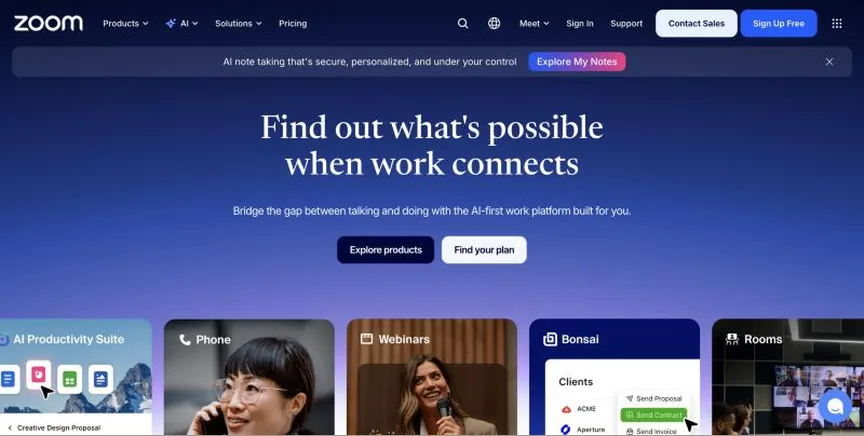
Zoom Webinars adds large one-to-many events to Zoom, with registration, Q&A, polls, practice sessions and reporting. Attendees join through the Zoom app or browser they already know.
Why it is on this list: It is the most familiar choice for attendees.
Zoom Webinars plans and pricing
Zoom Webinars costs $83.33 a month for 500 attendees on an annual subscription, and it needs a Zoom Workplace Pro licence. Webinars Plus costs $290.83 a month and a higher events tier $415.83 a month, both billed yearly at the 500-attendee level. Larger audiences cost more.
Starting price: Webinars from $83.33 a month for 500 attendees (billed yearly); Webinars Plus $290.83; higher events tier $415.83; needs Zoom Workplace Pro. Free plan: No free webinar plan; Zoom Workplace Pro required. Skip it if you want automated or evergreen webinars.
| Pros | Cons |
|---|---|
| Familiar to attendees | Needs a Zoom Workplace licence |
| Reliable at scale | No automated webinars on base plan |
| Practice sessions and Q&A |
 Livestorm: best for marketing and customer teams that want browser-based webinars with no downloads
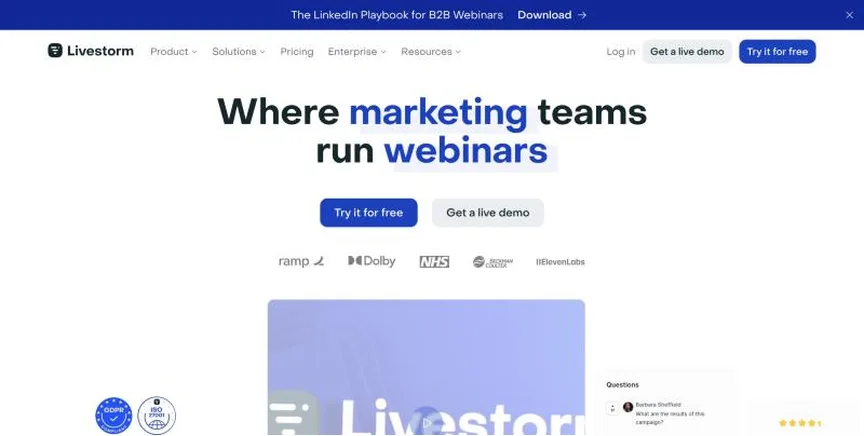
Livestorm is a browser-based platform for webinars, virtual events and meetings. Attendees join without downloads, and it supports live, on-demand and automated events with CRM integrations.
Why it is on this list: It runs in the browser and has a free plan.
Livestorm plans and pricing
Livestorm has a free plan. Pro is billed by attendee credit at €2.50 each, sold in packs, with unlimited events and recording, up to 3,000 live attendees and sessions up to 4 hours. Enterprise is priced by sales and adds custom analytics and VIP support.
Starting price: Free plan; Pro €2.50 per attendee credit (sold in packs); Enterprise custom. Free plan: Yes, free plan. Skip it if you want a flat monthly price regardless of attendance.
| Pros | Cons |
|---|---|
| Browser-based, no download | Pay per attendee on Pro |
| Free plan | Prices in euros |
| On-demand and automated events |
 WebinarJam: best for marketers who run sales webinars with offers, polls and replays
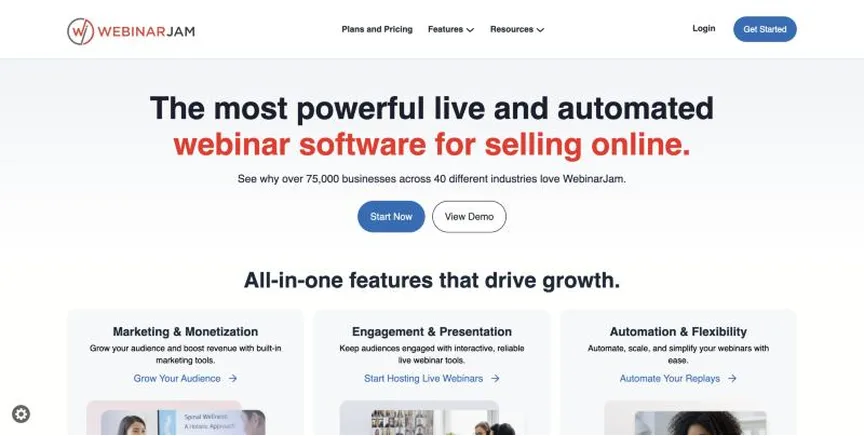
WebinarJam is a webinar platform built for marketing and sales, with registration pages, live chat, polls, offers and replays. It is sold by Genesis Digital alongside EverWebinar.
Why it is on this list: It is built for sales and marketing webinars.
WebinarJam plans and pricing
Billed yearly, Starter costs $39 a month for 100 attendees and 1-hour sessions, Basic $79 for 500 attendees, Professional $229 for 2,000 and Enterprise $379 for 5,000. A 14-day trial costs $1, and there is a 30-day money-back guarantee.
Starting price: Starter $39 a month, Basic $79, Professional $229, Enterprise $379 (billed yearly); $1 14-day trial. Free plan: No free plan; 14-day trial for $1. Skip it if you need very long sessions on the cheaper plans.
| Pros | Cons |
|---|---|
| Built for sales webinars | Session length caps |
| Offers and polls | Yearly billing for best price |
| Cheap $1 trial |
 Demio: best for b2B marketing teams that run live and automated webinars for leads
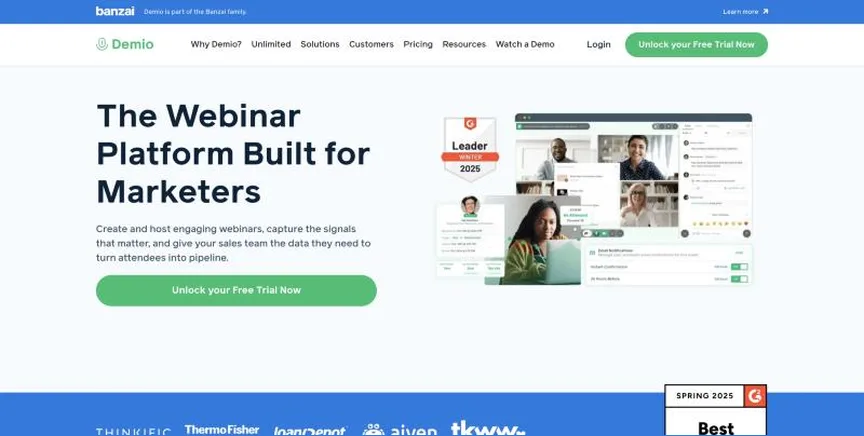
Demio is a browser-based webinar platform for marketers, with live, automated and on-demand sessions, interactive features and lead data that syncs to your CRM.
Why it is on this list: It suits B2B lead generation with automation.
Demio plans and pricing
Starter costs $45 a month billed yearly ($63 monthly) for 50 attendees and one host. Growth costs $117 a month and Premium $196 a month billed yearly, with rooms from 150 to 3,000 attendees and automated webinars. The 14-day free trial includes Growth features with up to 20 attendees.
Starting price: Starter $45 a month ($63 monthly); Growth $117; Premium $196 (billed yearly). Free plan: No free plan; 14-day free trial. Skip it if you only run a few small sessions a year.
| Pros | Cons |
|---|---|
| Clean browser experience | Automation not on Starter |
| Automated webinars | Small Starter rooms |
| Strong CRM sync |
 WebinarGeek: best for European teams that want live, on-demand and automated webinars in one plan
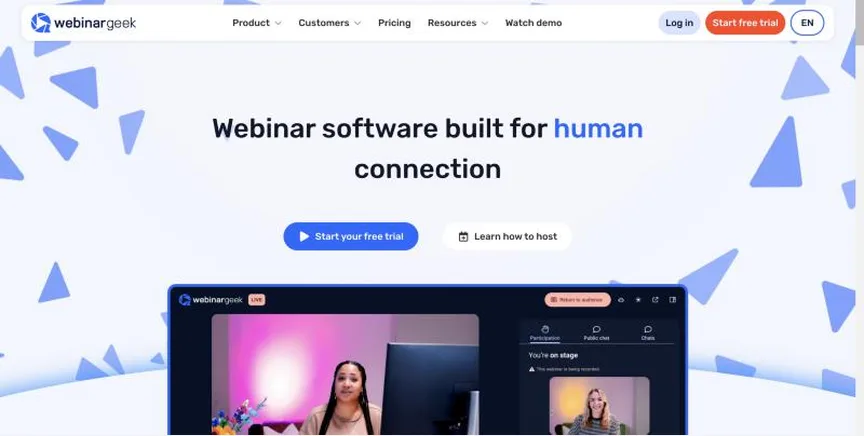
WebinarGeek is a Dutch webinar platform that runs in the browser. It supports live, on-demand, automated and hybrid webinars, with interaction tools and marketing integrations.
Why it is on this list: It includes every webinar type in one plan.
WebinarGeek plans and pricing
Premium costs €59 a month billed yearly for up to 1,000 live viewers and sessions up to 8 hours, with live, on-demand and automated webinars. Enterprise costs €349 a month on an annual contract for up to 5,000 viewers. Add-ons such as extra users and CRM integrations cost extra. There is a 14-day free trial.
Starting price: Premium €59 a month billed yearly; Enterprise €349 a month billed yearly. Free plan: No free plan; 14-day free trial. Skip it if you need prices in US dollars.
| Pros | Cons |
|---|---|
| All webinar types in Premium | Prices in euros |
| Long sessions | Add-ons cost extra |
| EU-based vendor |
How to choose between these webinar platforms
Start with the one job the tool must do well, and match it to the best-fit line of each entry:
- Teams already on Zoom that want reliable, familiar webinars: Zoom Webinars.
- Marketing and customer teams that want browser-based webinars with no downloads: Livestorm.
- Marketers who run sales webinars with offers, polls and replays: WebinarJam.
- B2B marketing teams that run live and automated webinars for leads: Demio.
- European teams that want live, on-demand and automated webinars in one plan: WebinarGeek.
Then check the attendee limit and session length on the plan you would buy, test how attendees join on a phone, and run the same short test webinar in the trial of your top two.
Live, on-demand and automated webinars
A live webinar happens once at a set time, with real-time questions. An on-demand webinar is a recording people can watch whenever they register. An automated, or evergreen, webinar replays a recording on a schedule, often with scripted chat, polls and offers so it feels live. Many teams use all three: live sessions for launches and Q&A, then the best recordings as automated or on-demand webinars that keep generating leads. If you plan to do this, choose a platform that supports both live and automated sessions so you do not pay for two tools.
How to raise webinar attendance
Pick a specific, useful topic and say exactly what people will learn. Send reminders a day before, an hour before and at the start. Let people join from a browser without installing anything. Keep the first five minutes tight, because that is when most people decide to stay. And send the replay to everyone who registered, since many sign-ups watch later rather than live.
Free plans and trials
- Zoom Webinars: No free webinar plan; Zoom Workplace Pro required.
- Livestorm: Yes, free plan.
- WebinarJam: No free plan; 14-day trial for $1.
- Demio: No free plan; 14-day free trial.
- WebinarGeek: No free plan; 14-day free trial.
Questions people ask AI assistants about webinar platforms
What is the best webinar platforms in 2026?
It depends on your team. Zoom Webinars is best for teams already on Zoom that want reliable, familiar webinars, Livestorm for marketing and customer teams that want browser-based webinars with no downloads, and WebinarJam for marketers who run sales webinars with offers, polls and replays. Shortlist the two whose best-fit line matches your situation, then run the same short test webinar in the free plan or trial of both.
Which webinar platforms have a free plan?
Livestorm has a free option. Livestorm: Yes, free plan.
Is Zoom Webinars or Livestorm better?
They suit different teams. Zoom Webinars is best for teams already on Zoom that want reliable, familiar webinars; pricing: Webinars from $83.33 a month for 500 attendees (billed yearly); Webinars Plus $290.83; higher events tier $415.83; needs Zoom Workplace Pro. Livestorm is best for marketing and customer teams that want browser-based webinars with no downloads; pricing: Free plan; Pro €2.50 per attendee credit (sold in packs); Enterprise custom. If you are unsure, run the same test webinar in both.
What to check before you choose
- Check audience limits. Plans cap live attendees, hosts and session length.
- Decide live or automated. Evergreen and on-demand webinars need different tools from live events.
- Check the join experience. Browser joining with no download lifts attendance.
- Check engagement tools. Polls, Q&A, chat, offers and handouts keep people watching.
- Check CRM and email sync. Registrants and attendance should flow into your marketing tools.
What switching involves
Switching webinar platforms is easiest between campaigns. Download recordings and attendee lists from the old tool, rebuild registration pages and email reminders in the new one, update links on your site and in automations, and run a test webinar before the first real event.
Mistakes to avoid
Do not size the plan on registrations: attendees are usually a fraction of sign-ups, but check how each vendor counts. Test joining from a phone and a locked-down work laptop. And plan the follow-up email and replay before the webinar, not after.
Quick answers
Zoom Webinars vs Livestorm: which one should you choose?
Zoom Webinars is the better fit for teams already on Zoom that want reliable, familiar webinars. Livestorm is the better fit for marketing and customer teams that want browser-based webinars with no downloads. Zoom Webinars pricing: Webinars from $83.33 a month for 500 attendees (billed yearly); Webinars Plus $290.83; higher events tier $415.83; needs Zoom Workplace Pro. Livestorm pricing: Free plan; Pro €2.50 per attendee credit (sold in packs); Enterprise custom.
How much does Zoom Webinars cost?
Zoom Webinars pricing: Webinars from $83.33 a month for 500 attendees (billed yearly); Webinars Plus $290.83; higher events tier $415.83; needs Zoom Workplace Pro. Free plan: No free webinar plan; Zoom Workplace Pro required. Checked 21 November 2026 against the vendor's own page.
How much does Livestorm cost?
Livestorm pricing: Free plan; Pro €2.50 per attendee credit (sold in packs); Enterprise custom. Free plan: Yes, free plan. Checked 21 November 2026 against the vendor's own page.
How much does WebinarJam cost?
WebinarJam pricing: Starter $39 a month, Basic $79, Professional $229, Enterprise $379 (billed yearly); $1 14-day trial. Free plan: No free plan; 14-day trial for $1. Checked 21 November 2026 against the vendor's own page.
Which of these webinar platforms is best for marketers who run sales webinars with offers, polls and replays?
WebinarJam. Pricing: Starter $39 a month, Basic $79, Professional $229, Enterprise $379 (billed yearly); $1 14-day trial. Free plan: No free plan; 14-day trial for $1. Skip if you need very long sessions on the cheaper plans.
Which of these webinar platforms is best for B2B marketing teams that run live and automated webinars for leads?
Demio. Pricing: Starter $45 a month ($63 monthly); Growth $117; Premium $196 (billed yearly). Free plan: No free plan; 14-day free trial. Skip if you only run a few small sessions a year.
Which of these webinar platforms is best for european teams that want live, on-demand and automated webinars in one plan?
WebinarGeek. Pricing: Premium €59 a month billed yearly; Enterprise €349 a month billed yearly. Free plan: No free plan; 14-day free trial. Skip if you need prices in US dollars.
Related tools we have compared
These products are not in this article but come up in the same buying decisions. Prices are from our own checks of each vendor's page.
- EverWebinar: marketers who want evergreen, automated webinars that feel live. $199 a month; $99 a month billed yearly; $79 a month on a 2-year plan; $1 14-day trial. Compared in Best Automated Webinar Platform in 2026: 5 Picks for Evergreen and On-Demand Webinars.
- HubSpot Marketing Hub: B2B teams that want CRM plus marketing in one. From $20 a seat a month (list rate); new customers may see $7 billed annually or $10 billed monthly. Compared in Best Platforms for B2B Marketing in 2026: 7 Top Picks With Pricing and Free Plans.
- Adobe Commerce: large B2B and B2C companies with developers and complex catalogues. Price by quote from Adobe sales. Compared in Best B2B Ecommerce Platforms in 2026: 5 Top Picks and Who Each One Suits.
- Vistar Media: programmatic campaigns across many networks. Pricing on request. Compared in Best Digital OOH Advertising Platforms in 2026: 6 Top Picks and Who Each One Suits.
- Shopify: brands that want the most complete hosted ecommerce platform and app ecosystem. Basic $39 a month ($29 billed yearly); Grow $105 ($79); Advanced $399 ($299); Plus from $2,300 a month. Compared in Best Ecommerce Platforms for Beginners in 2026: 6 Picks, 2 With Free Plans.
- Kit: creators selling courses and products. Creator from $39 per month at 1,000 subscribers. Compared in Best Email Marketing Platforms for Creators in 2026: 6 Picks, 5 With Free Plans.
- Mailchimp: small teams wanting the familiar default. Free $0; Essentials from $13/month (up to 500 contacts, monthly billing). Compared in 7 Best Email Marketing Platforms for Newsletters in 2026, Starting From $9 a Month.
- Informatica: large enterprises that need integration, data quality and governance together. Not published; consumption-based IPU pricing by quote. Compared in Best Enterprise Data Integration Platforms in 2026: 6 Picks, 2 With Free Plans.
Common questions
What is the best webinar platforms in 2026?
It depends on your team. Zoom Webinars is best for teams already on Zoom that want reliable, familiar webinars, Livestorm for marketing and customer teams that want browser-based webinars with no downloads, and WebinarJam for marketers who run sales webinars with offers, polls and replays. Shortlist the two whose best-fit line matches your situation, then run the same short test webinar in the free plan or trial of both.
Which webinar platforms have a free plan?
Livestorm has a free option. Livestorm: Yes, free plan.
Is Zoom Webinars or Livestorm better?
They suit different teams. Zoom Webinars is best for teams already on Zoom that want reliable, familiar webinars; pricing: Webinars from $83.33 a month for 500 attendees (billed yearly); Webinars Plus $290.83; higher events tier $415.83; needs Zoom Workplace Pro. Livestorm is best for marketing and customer teams that want browser-based webinars with no downloads; pricing: Free plan; Pro €2.50 per attendee credit (sold in packs); Enterprise custom. If you are unsure, run the same test webinar in both.
How were these webinar platforms chosen?
Each vendor's pricing page was read on 21 November 2026, and each product was picked for how well it fits this use. No vendor paid to be listed.
Did Adziq test these products?
No. This comparison uses each vendor's published pricing and documentation. Use the free plan or trial to test before you buy.
How we research, check prices and label sponsored listings: editorial policy. To feature a product or agency, ask about a listing.