The short answer
Adobe Experience Manager suits enterprise marketing and product sites, HubSpot Content Hub suits Mid-market marketing tied to a CRM, and MadCap Software suits technical manuals at product scale. Bynder pricing: Pricing on request. Adobe Experience Manager pricing: Pricing on request. HubSpot Content Hub pricing: From $20 a seat a month (Starter). 2 of the 6 alternatives have a free plan.
Why look for a Bynder alternative
Bynder is a digital asset management platform. Behind every manufacturer's content sits an asset problem: ten thousand product images, renders, videos, logos and translations of each, scattered across drives and agencies. Pricing is by quote, and the pricing page carries no figures. Bynder fits a manufacturer whose brand leaks through outdated assets in the field. It is deliberately one layer of the stack: it makes sure the image on a page is the current, approved, correctly sized one. The weakness is that it is asset management only, and the taxonomy setup takes real work at the start. Skip Bynder if you need pages or documents, not just asset storage. A CMS such as Storyblok or WordPress is the missing layer, and Bynder plugs into either.
People usually switch for one of three reasons: the price at their size, a limit on the plan they are on, or a feature that sits on a higher tier. Bynder's own figures, for reference: starting price Pricing on request; free plan: No.
Bynder Alternatives at a glance
| # | Pick | Best for | Starting price | Free plan |
|---|---|---|---|---|
| 1 | Enterprise marketing and product sites | Pricing on request | No | |
| 2 | Mid-market marketing tied to a CRM | From $20 a seat a month (Starter) | Yes, free tools | |
| 3 | Technical manuals at product scale | Flare from $3,150 a year per author | No | |
| 4 | Cloud-based structured documentation | From $15,000 a year (CCMS Business) | No, free trial | |
| 5 | Product sites with visual editing | From $99 a month (Growth); free Starter plan | Yes, Starter plan | |
| 6 | Affordable websites and resource centres | Free (software); hosting and maintenance extra | Yes |
How we chose
These are the products that Adziq compares side by side with Bynder in Best Platform for Content for Manufacturing: 7 Picks by Use Case. Prices and free-plan details were read from each vendor's pricing page and last checked on 2026-11-14. No hands-on testing was done. The order is not a ranking by price.
 Adobe Experience Manager: best for enterprise marketing and product sites
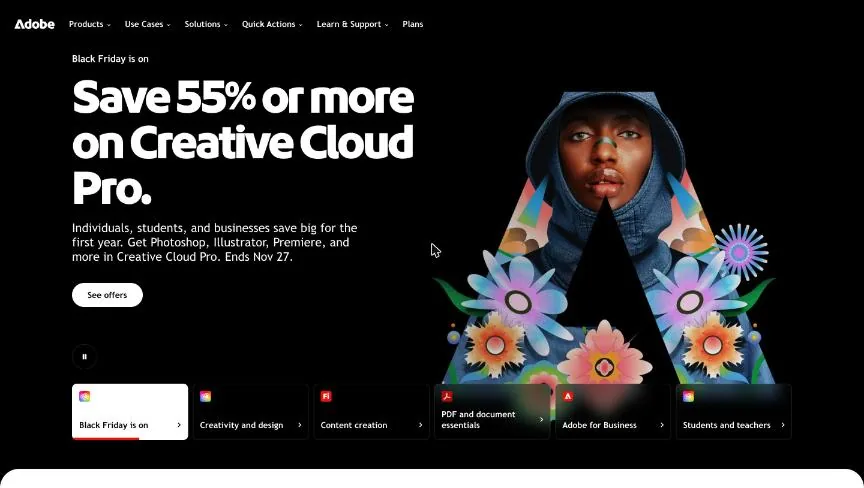
Adobe Experience Manager is the enterprise marketing platform: the website, the product catalogue front end, the campaign pages and the asset library behind them, governed centrally and localised across every market. Large manufacturers with several brands and regions use it to keep thousands of product pages consistent and current, and its asset management half alone justifies the evaluation for image and video heavy catalogues. Adobe Experience Manager fits a global manufacturer whose marketing estate is itself a product. The weakness is the commitment: Adobe publishes no price, licences are enterprise-scale, implementation needs specialist partners, and it needs dedicated administrators. Skip Adobe Experience Manager if you have no implementation partner or dedicated administrators. Storyblok or HubSpot will run the same marketing site with far less overhead.
Starting price: Pricing on request. Free plan: No. Skip if you have no implementation partner or dedicated administrators.
 HubSpot Content Hub: best for Mid-market marketing tied to a CRM
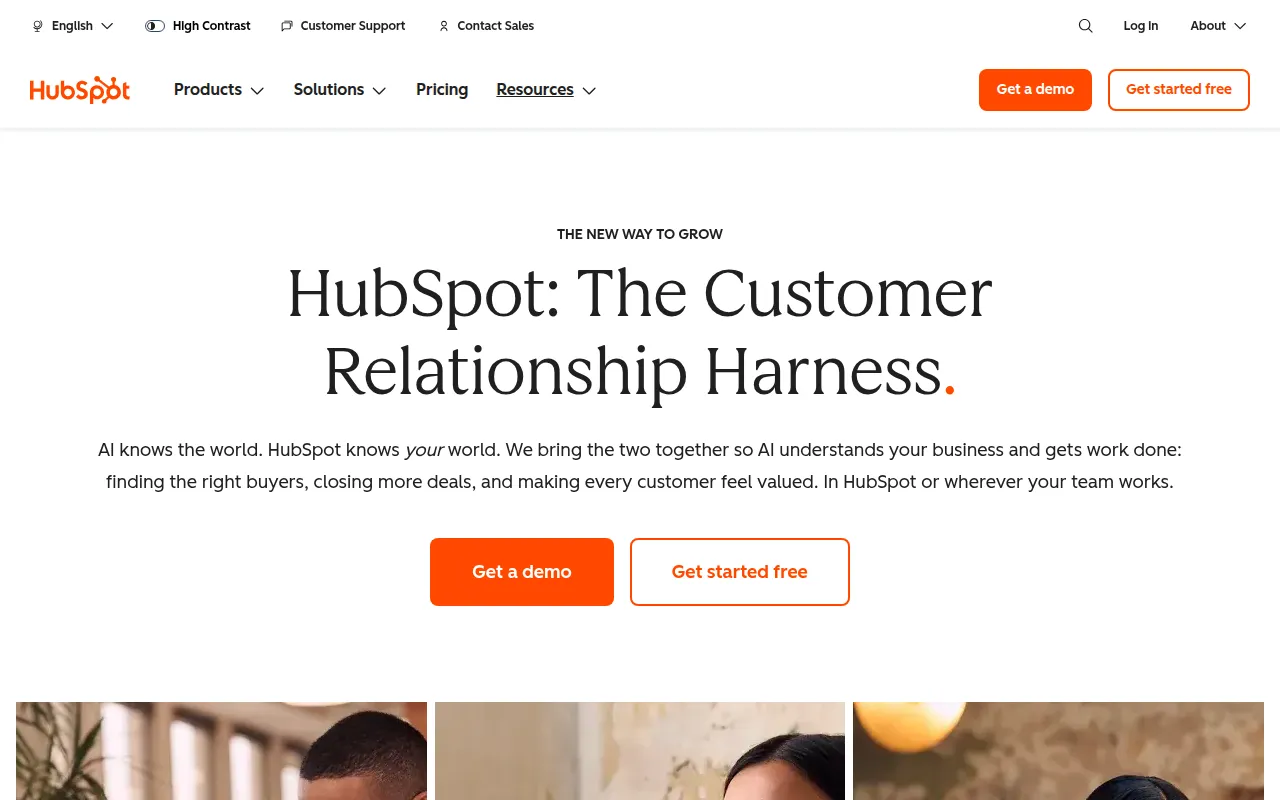
HubSpot Content Hub covers the website, blog and landing pages inside the HubSpot platform, with AI content tools under the Breeze brand. For a company selling through quotes and relationships, that connection is the product. HubSpot fits the mid-market manufacturer whose marketing team is three people and a CRM. It is far easier to run than an enterprise suite, and it carries built-in SEO guidance, forms and email in the same system. The weakness is dependence: its value depends on adopting HubSpot's CRM, design flexibility is good rather than limitless, and it has no technical documentation capability. Skip HubSpot Content Hub if you do not want your website tied to HubSpot's CRM. WordPress gives you the same site with no vendor lock-in, and Storyblok gives you the same pages with more design freedom. A reader who downloads a guide can be scored and routed without stitching tools together. Skip Content Hub if you do not use HubSpot. The price only makes sense when the CRM connection is doing real work. Content Hub fits a team already running HubSpot as its CRM, because content, contacts and campaigns share one database.
Starting price: From $20 a seat a month (Starter). Free plan: Yes, free tools. Skip if you do not want your website tied to HubSpot's CRM.
 MadCap Software: best for technical manuals at product scale
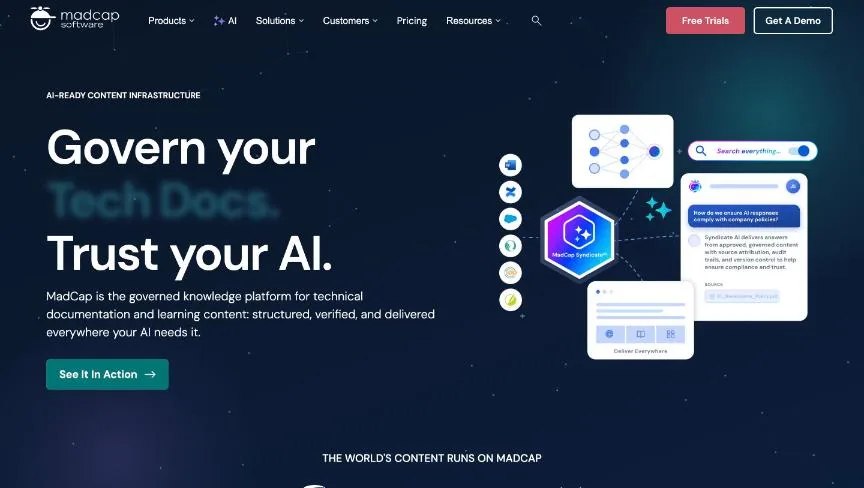
MadCap Software is the name technical writing teams in manufacturing reach for first. Its Flare tool authors manuals and help systems, and its IXIA CCMS manages content as reusable components under the DITA standard, so one specification, written once, assembles into hundreds of product publications. Flare starts at $3,150 a year per author. Flare Online is licensed per user and billed annually, with a 12-month commitment, and the cloud plans add review seats, storage and translation workflows by tier. MadCap fits a manufacturer with a large catalogue and a dedicated documentation team. Component reuse is the point: the same warning, the same torque figure, the same procedure, repeated across every variant, in every language, always correct. DITA structured authoring is a real discipline, and IXIA CCMS is quoted rather than priced on the page. Skip MadCap Software if you have three products and no dedicated technical writers. Paligo gives you the same idea with a gentler start, and WordPress covers the public site.
Starting price: Flare from $3,150 a year per author. Free plan: No. Skip if you have three products and no dedicated technical writers.
 Paligo: best for cloud-based structured documentation
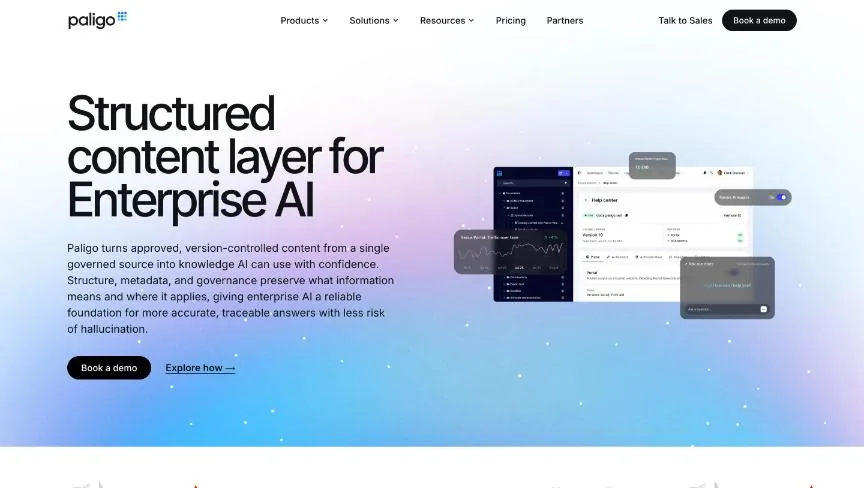
Paligo is a cloud component content management system. Writers work in a browser editor while the system keeps content structured underneath, so topics can be reused across manuals, filtered by product variant, translated as components, and published to print and web from one source. CCMS Business starts at $15,000 a year, with 2 authors and 2 languages included, and Enterprise is custom priced with 8 authors and unlimited languages. Two add-ons are priced separately: Nexus Portal from $5,000 a year for hosted delivery, and Nexus Answers from $6,000 a year for AI answers grounded in published content. Paligo fits a mid-sized manufacturer whose manuals have outgrown folders of Word files. It is the gentlest route into structured documentation, with a free trial of the CCMS available. Paligo does documentation, not campaigns. A manufacturer pairs it with a marketing platform and lets each do its own job. Skip Paligo if your budget is under $15,000 a year for documentation.
Starting price: From $15,000 a year (CCMS Business). Free plan: No, free trial. Skip if your budget is under $15,000 a year for documentation.
 Storyblok: best for product sites with visual editing
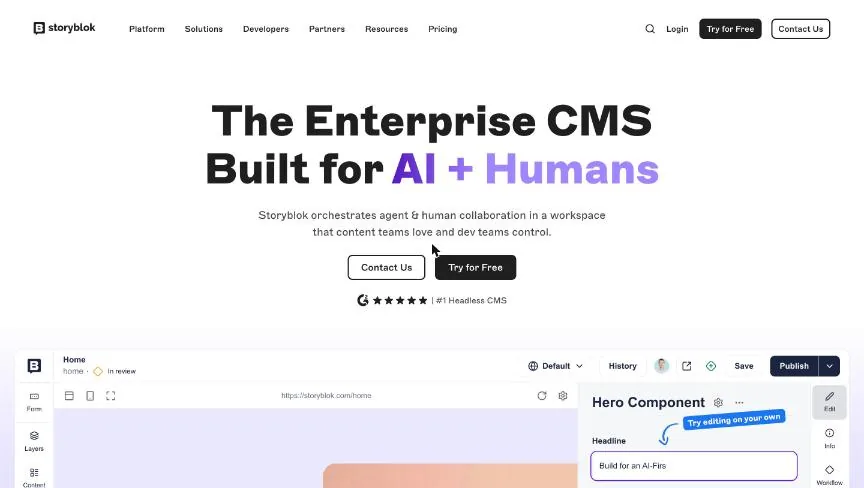
Storyblok is a headless CMS with a visual editor. Engineers build fast product pages, configurators and dealer portals once, while marketers update ranges, launch products and localise pages without a ticket. Component-based content matches how product families actually work: shared blocks with per-model variations. The Starter plan is free, Growth costs $99 a month or $90.75 a month billed annually, and Growth Plus is $349 a month. Every new space starts with a 45-day free trial of Growth Plus. Storyblok fits the manufacturer whose product site has become a development bottleneck. The free Starter plan lets a team prove the idea before paying. It will not produce your service manuals. Skip Storyblok if you need print manuals or DITA workflows. Paligo and MadCap are built for that job; Storyblok is not. Storyblok is a headless CMS with a visual editor, built so marketers can edit content and see the page as they work. Plans are priced per space, which maps to one site. Starter is free for one space, one seat, 100,000 API requests and 100 GB of traffic a month.
Starting price: From $99 a month (Growth); free Starter plan. Free plan: Yes, Starter plan. Skip if you need print manuals or DITA workflows.
 WordPress: best for affordable websites and resource centres
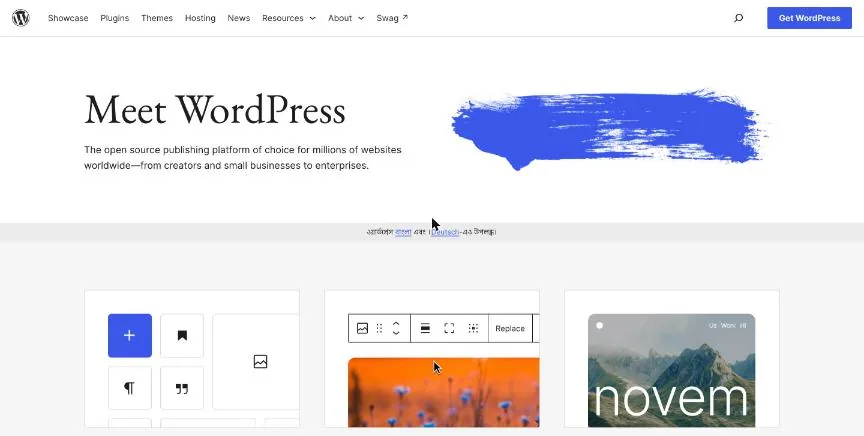
WordPress is free, open-source software, and it runs a large share of manufacturing websites for a simple reason: it is free, familiar, and good enough for the marketing job at most companies. A competent agency can build a product catalogue, a dealer locator, a careers section and a resource centre of PDFs and videos on it, and hand over a site the marketing team can update without help. You pay for hosting, maintenance and security, not a licence. WordPress fits almost any manufacturer as the public site, especially one with a tight budget. The weakness is ownership: you own security, updates and backups, and plugin quality varies. Skip WordPress if you need structured documentation or component reuse. That is Paligo's job, and WordPress is the wrong tool for it. WordPress is the free, open-source software that runs a large share of the web, and it is the best platform for SEO because it gives you the most control. You own the files, the database and the server, so you can change anything: titles, meta descriptions, URLs, sitemaps, schema markup, redirects, caching and Core Web Vitals.
Starting price: Free (software); hosting and maintenance extra. Free plan: Yes. Skip if you need structured documentation or component reuse.
Which Bynder alternative fits which need
- Enterprise marketing and product sites: Adobe Experience Manager, Pricing on request.
- Mid-market marketing tied to a CRM: HubSpot Content Hub, From $20 a seat a month (Starter).
- Technical manuals at product scale: MadCap Software, Flare from $3,150 a year per author.
- Cloud-based structured documentation: Paligo, From $15,000 a year (CCMS Business).
- Product sites with visual editing: Storyblok, From $99 a month (Growth); free Starter plan.
- Affordable websites and resource centres: WordPress, Free (software); hosting and maintenance extra.
Free plans and trials
Bynder: No. The alternatives:
- Adobe Experience Manager: No.
- HubSpot Content Hub: Yes, free tools.
- MadCap Software: No.
- Paligo: No, free trial.
- Storyblok: Yes, Starter plan.
- WordPress: Yes.
What to check before you choose
The same five checks apply to every tool on this page, and they matter more than the starting price.
- Who edits content day to day. Developers and marketers want different things from a CMS. Check that the people who publish most can create and change pages without raising a ticket.
- Hosted or self-hosted. A hosted platform includes updates, security and hosting in the price. Self-hosted software is cheaper to license but you pay for hosting and maintenance in time or money.
- How pricing grows. Plans scale by seats, content records, API calls, sites or traffic. Find the measure that will hit its limit first for you.
- Content structure and reuse. If the same content feeds a website, an app and documentation, a headless or structured CMS saves work. For a single marketing site it can be more than you need.
- Search, redirects and SEO control. Confirm you can set titles, meta descriptions, canonical tags and redirects without a developer.
What switching from Bynder involves
A CMS migration is a project, not a switch. Start with a full export of content, media and URLs, and build a redirect map so every old address points to its new page; lost redirects are the most common cause of traffic drops after a move. Content models rarely match between systems, so expect to reshape some fields and clean up formatting. Rebuild forms, tracking and integrations, then test on a staging site and crawl it for broken links before launch. Keep the old system available read-only until you are sure nothing was left behind. If you are on an annual contract with Bynder, check the renewal date and notice period first.
Mistakes to avoid
Do not switch on headline price alone. The starting prices here use different units (per user, per contact, per site), so price each alternative at your own usage, and check which features sit on the plan you would actually buy.
Quick answers
Adobe Experience Manager vs HubSpot Content Hub: which one should you choose?
Adobe Experience Manager is the better fit for enterprise marketing and product sites. HubSpot Content Hub is the better fit for mid-market marketing tied to a CRM. Adobe Experience Manager does not publish prices; pricing is on request. HubSpot Content Hub pricing: From $20 a seat a month (Starter).
Which of these alternatives has a free plan?
HubSpot Content Hub, Storyblok and WordPress offer a free plan. Paligo offers a free trial instead. Checked 14 November 2026.
How much does Adobe Experience Manager cost?
Adobe Experience Manager does not publish prices; pricing is on request. Checked 14 November 2026 against the vendor's own page.
How much does HubSpot Content Hub cost?
HubSpot Content Hub pricing: From $20 a seat a month (Starter). Free plan: Yes, free tools. Checked 14 November 2026 against the vendor's own page.
How much does MadCap Software cost?
MadCap Software pricing: Flare from $3,150 a year per author. Checked 14 November 2026 against the vendor's own page.
Which alternative is best for technical manuals at product scale?
MadCap Software. Pricing: Flare from $3,150 a year per author. Skip if you have three products and no dedicated technical writers.
Which alternative is best for cloud-based structured documentation?
Paligo. Pricing: From $15,000 a year (CCMS Business). Free plan: No, free trial. Skip if your budget is under $15,000 a year for documentation.
Which alternative is best for product sites with visual editing?
Storyblok. Pricing: From $99 a month (Growth); free Starter plan. Free plan: Yes, Starter plan. Skip if you need print manuals or DITA workflows.
What is the catch with the HubSpot Content Hub free plan?
The free plan covers: free tools. Paid pricing: From $20 a seat a month (Starter). Checked 14 November 2026.
Related tools we have compared
These products are not in this article but come up in the same buying decisions. Prices are from our own checks of each vendor's page.
- Contentful: enterprise content across many markets. From $300 a month (Lite). Compared in Best Ghost Alternatives: 5 Compared.
- Jasper: marketing teams needing brand voice. From $69 a month billed monthly ($59 a month billed yearly). Compared in Best Copy.ai Alternatives: 7 Compared.
- Squarespace: design-led affiliate sites. From $19/month (Basic, billed yearly). Compared in Best Webflow Alternatives: 7 Compared.
- Copy.ai: go-to-market teams using workflows. From $49 a month billed monthly ($36 a month billed yearly). Compared in Best Anyword Alternatives: 7 Compared.
- ChatGPT Plus: one person who writes a bit of everything. $20/mo (Plus). Compared in Best Jasper Alternatives: 7 AI Writing Tools Compared.
- Sanity: developer-led SaaS content at low cost. Free up to 20 seats; Growth $15 a seat a month. Compared in Best Platform for Content for SaaS: 7 Compared.
- Ghost: publishing plus paid memberships. From $18 a month billed annually (Starter). Compared in Best Sanity Alternatives: 5 Compared.
- Writesonic: writing plus AI search visibility tracking. From $99 a month billed monthly ($79 a month billed annually). Compared in Best Copy.ai Alternatives: 7 Compared.
Common questions
What is the best alternative to Bynder?
It depends on what you need. Adobe Experience Manager suits enterprise marketing and product sites, HubSpot Content Hub suits Mid-market marketing tied to a CRM, and MadCap Software suits technical manuals at product scale.
How much does Bynder cost?
Bynder pricing: Pricing on request. Free plan: No. Checked 2026-11-14 against the vendor's page.
Is there a free alternative to Bynder?
Yes. Storyblok and WordPress have a free plan. Check the limits before you rely on one.
How were these Bynder alternatives chosen?
They are the products Adziq already compares alongside Bynder, with prices read from each vendor's pricing page.
Did Adziq test these products?
No. This comparison uses each vendor's published pricing and documentation, checked on the dates shown.
Sources
- Bynder pricing
- Adobe Experience Manager pricing
- HubSpot Content Hub pricing
- MadCap Software pricing
- Paligo pricing
- Storyblok pricing
- WordPress pricing
How we research, check prices and label sponsored listings: editorial policy. To feature a product or agency, ask about a listing.