
The short answer
FollowUp CRM tracks bids well for construction, but it starts at $99 per user a month with a five-user minimum and a launch fee from $2,500. Roofing contractors should look at JobNimbus or AccuLynx, builders who want CRM inside project management should look at Buildertrend, and small teams on a tight budget should look at HubSpot or monday Sales CRM.
Key takeaways
- FollowUp CRM starts at $99 per user a month, billed annually, with a five-user minimum and a launch fee from $2,500.
- Roofing contractors get more from JobNimbus or AccuLynx, which are built around roofing jobs and insurance claims.
- Buildertrend and Procore put the CRM inside project management instead of beside it.
- HubSpot is the only alternative here with a genuinely free plan.
- JobNimbus, AccuLynx, and Procore do not publish prices, so budget on a written quote, not a headline figure.
What FollowUp CRM does well, and why contractors leave
FollowUp CRM is a CRM built for the way contractors sell. It tracks bids and the sales pipeline, generates proposals, logs email through Outlook, and connects to construction accounting systems including QuickBooks, Sage, and Viewpoint. Its strength is follow-up: every open bid carries a follow-up date, and the dashboard shows which bids are going cold. For a commercial contractor whose sales team lives in bids and proposals, that focus is exactly right. For the channels that feed a pipeline like this one, the digital marketing for contractors post covers how contractors win work online.
Contractors leave for four common reasons. The first is price and commitment: Starter costs $99 per user a month, billed annually, with a five-user minimum, so the smallest possible bill is $495 a month before the one-time launch fee, which starts at $2,500. The second is scope: FollowUp CRM tracks bids, but it does not schedule crews, manage production, or run jobs. The third is fit: it is built for commercial construction bidding, so a roofer or a home remodeler pays for a tool shaped around someone else's sales process. The fourth is the contract: plans commit annually, and cancellation needs notice ahead of renewal.
Which alternative fits which contractor
| Your situation | Look at |
|---|---|
| You sell home improvement jobs in the customer's home | Leap CRM |
| You roof houses and want a simple first CRM | JobNimbus |
| You roof houses and live in insurance claims | AccuLynx |
| You run large commercial projects end to end | Procore |
| You build homes and want CRM inside project management | Buildertrend |
| You want visual pipelines that link to project boards | monday Sales CRM |
| You want a free start and a general-purpose CRM | HubSpot |
How we chose
Seven alternatives, one question: what does each cost a contractor, and what job does it do that FollowUp CRM does not? Prices and plan limits were read from each vendor's pricing page, or from the vendor's own plan pages where no price is published, on 14 November 2026. No hands-on testing was done. Where a vendor publishes no price, the post says so plainly instead of repeating a third-party estimate as fact.
1. Leap CRM (formerly JobProgress): best for home improvement contractors who sell in the home
JobProgress is now sold as Leap CRM, after Leap acquired it. Leap CRM Essential costs $79 a month for a single user, with a 14-day free trial, and Leap CRM Team starts from $298 a month and includes the first user, with $99 a month for each additional user. It covers lead capture, estimating, proposals, digital signatures, scheduling, and invoicing for residential home improvement work. Skip Leap CRM if you need more than one user and your budget is under $298 a month, because Essential is capped at a single user and the second person forces the jump to Team.
2. JobNimbus: best for roofing contractors who want a simple first CRM
JobNimbus is a CRM and job management tool built for roofing contractors, and it is the easiest on-ramp in this list for a small roofing shop. Its pricing page names four tiers by user cap, Essentials for up to 3 users, Pro for up to 10, Premium for up to 19, and Enterprise for 20 or more, with a 14-day free trial and no credit card. The page does not publish dollar amounts, so every plan says "Request pricing" and the real number comes from a sales call. Skip JobNimbus if you need a published price before talking to sales, because you will not get one from the website.
3. AccuLynx: best for roofing contractors with heavy insurance claim work
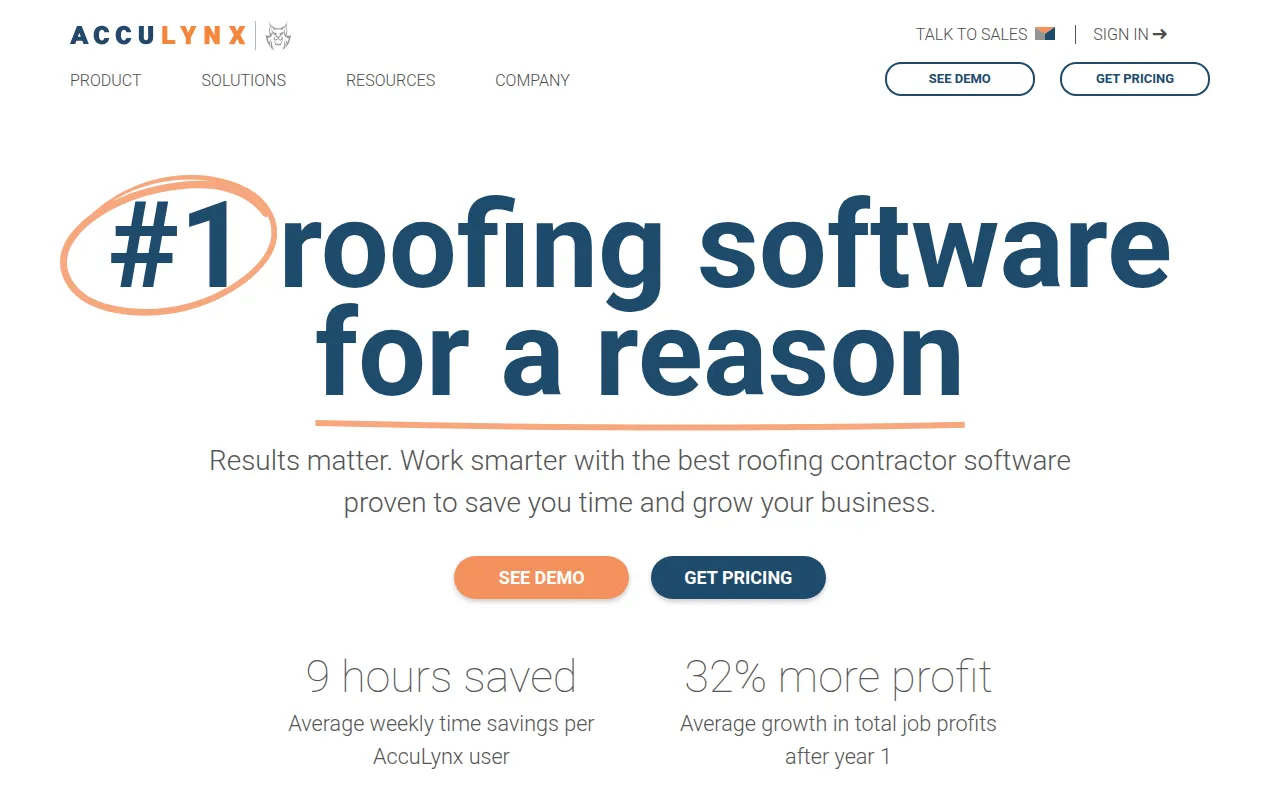
AccuLynx has been roofing-only since 2008, and it is the deepest roofing production suite in this list. It handles the full job, from lead and estimate through production, invoicing, and insurance claim workflows, with supplier integrations for ordering materials. Its plan options page names Pro and Elite tiers with custom quotes and no dollar amounts, so pricing is by quote and the real cost depends on seats and add-ons such as texting, SmartDocs, and the customer portal. Skip AccuLynx if you need a published price, because it is built and priced for established roofing companies.
4. Procore: best for large general contractors running complex projects
Procore is construction management software for large general contractors, and its CRM capability sits inside a platform that runs the whole project: bidding, scheduling, budgets, change orders, drawings, and field communication. A contractor who needs the sales pipeline connected to the job itself, rather than a standalone CRM, gets more from Procore than from a bid tracker. Pricing is on request, with no public price list, and the product is priced for companies running multiple large projects at once. Skip Procore if you are a small contractor and need a published price.
5. Buildertrend: best for residential builders who want CRM inside project management

Buildertrend is built for home builders and remodelers, and it combines scheduling, estimates, budgets, change orders, selections, and a client portal where homeowners see progress, approve selections, and pay. The CRM lives inside that project workflow instead of beside it, which suits a builder whose sales process ends in a build. Essential costs $499 a month with unlimited users and projects, Advanced $799, and Complete $1,099, with first-month discounts that bring the first month of Essential to $199. There is no free trial; Buildertrend offers a guided demo instead. Skip Buildertrend if your budget is under $499 a month, or if you do commercial work, because its workflows are designed around residential builds.
6. monday Sales CRM: best for contractors who want visual pipelines linked to project boards
monday Sales CRM's Basic plan costs $12 per seat per month billed annually, or $18 billed monthly, with Standard at $17, Pro at $28, and Ultimate on request. Its strength is the board: visual, no-code pipelines that flow into work and project management on the same platform, so sales and delivery share one tool. Basic has no automations or integrations and caps at 1,000 contacts and deals, and paid plans carry a three-seat minimum. There is no free plan, only a 14-day trial. Skip monday if you need automations on the cheapest plan, or if you have one or two users and do not want to pay for three seats.
7. HubSpot: best for small contractors who want a free start
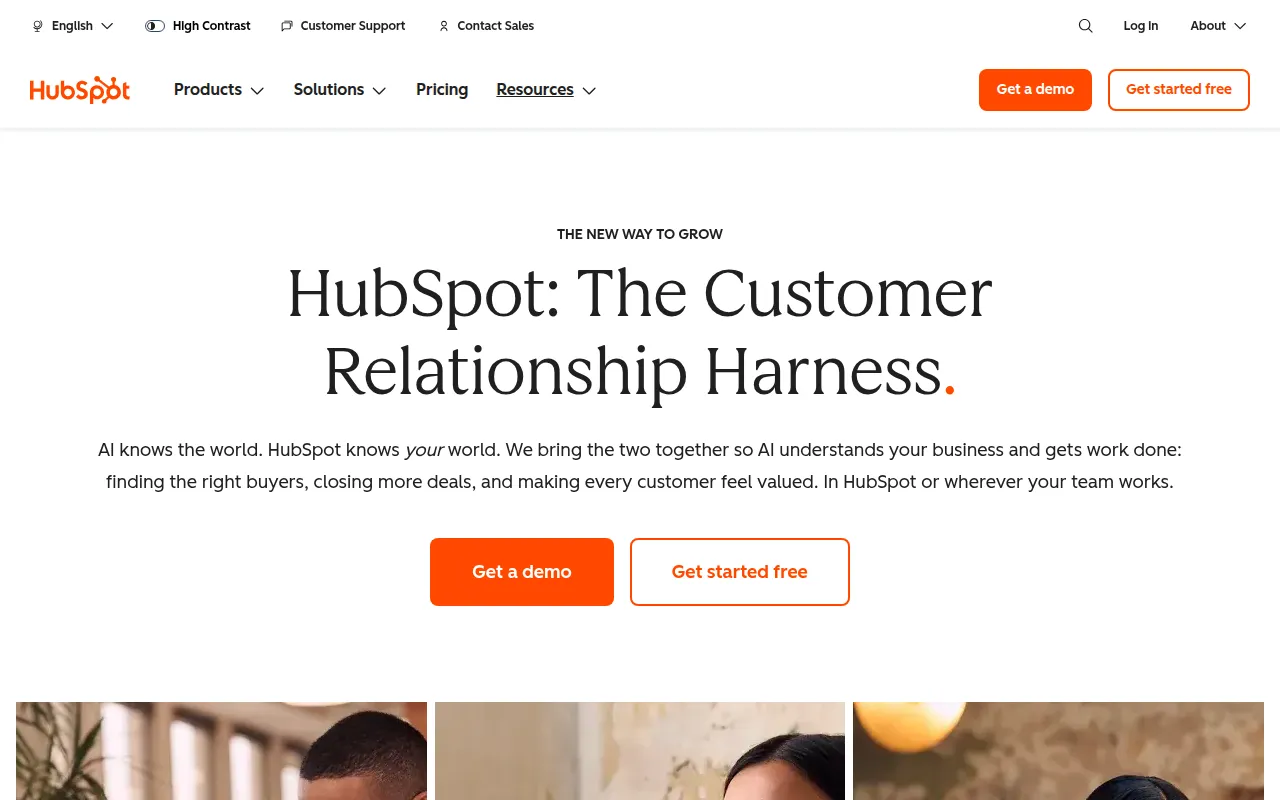
HubSpot's free CRM costs $0 for up to 2 users, with no credit card and no expiry, and paid plans start at $20 per seat per month at list price. The free plan covers contact management, deal pipelines, meeting scheduling, and email tracking. Forecasting, conversation intelligence, and more than 300 workflows only appear on Professional at $90 per seat a month on annual billing, with a mandatory $1,500 one-time onboarding fee. HubSpot is a general-purpose CRM, not a contractor tool, so it has no bid tracking, estimating, or production scheduling. Skip HubSpot if you need more than two users on the free plan and a tight budget, because the per-seat bill starts as soon as the third person joins.
What five users cost on each alternative
FollowUp CRM Starter for five users costs $495 a month, billed annually, plus a $2,500 one-time launch fee — year one costs $8,440 before tax. Leap CRM Team for five users costs $298 a month for the first user plus $99 for each of the other four — $694 a month. Buildertrend Essential costs $499 a month for unlimited users — five users cost the same as fifty. monday Sales CRM Basic for five users costs $60 a month on annual billing. HubSpot's free plan covers two users at $0, and five users on the cheapest paid plan cost $100 a month at the $20 list price. JobNimbus, AccuLynx, and Procore publish no prices — their five-user cost is whatever the written quote says.
What switching from FollowUp CRM involves
Switching CRM is mostly a data and contract job. Start with the contract: plans commit annually, and cancellation needs written notice before the renewal date. Check the renewal date first, because missing the notice window can mean paying for another year.
Next, export the data: contacts, companies, deals, bid history, follow-up dates, notes, and custom fields. Bid history matters most — a new tool that only imports names leaves the sales history behind. Check whether the new tool imports bid stages and follow-up dates, or only contacts and deals.
Then rebuild what does not transfer: automations, proposal templates, dashboards, and integrations do not migrate. Leap CRM and Buildertrend both need onboarding time to set up estimating and proposal templates, and JobNimbus and AccuLynx need time to rebuild automation rules. Budget a week of part-time work for a small team — longer if the pipeline holds hundreds of open bids.
Finally, check the new tool's contract terms before signing. Annual commitments, seat minimums, and setup fees are common in this category, so get the quote in writing and confirm what happens at renewal. The marketing agency pricing models guide explains how those fees are usually structured, and Adziq's SEO service page covers the lead generation that keeps a new pipeline full.
FollowUp CRM Alternatives for Contractors at a glance
| Pick | Best for | Starting price | Free plan |
|---|---|---|---|
| Leap CRM (formerly JobProgress) | Home improvement contractors who sell in the home | $79 per month, Leap CRM Essential, single user; Team from $298 per month | No free plan; 14-day free trial on Essential |
| JobNimbus | Roofing contractors who want a simple first CRM | Pricing on request | No free plan; 14-day free trial |
| AccuLynx | Roofing contractors with heavy insurance claim work | Pricing on request | No free plan; demo on request |
| Procore | Large general contractors running complex projects | Pricing on request | No free plan; demo on request |
| Buildertrend | Residential builders who want CRM inside project management | $499 per month, Essential, unlimited users and projects | No free plan; guided demo instead of a trial |
| monday Sales CRM | Contractors who want visual pipelines linked to project boards | $12 per seat per month, Basic, billed annually ($18 per seat per month, billed monthly) | No free plan; 14-day free trial |
| HubSpot | Small contractors who want a free start | Free $0; Sales Hub Starter $20 per seat per month (list price) | Yes, Free CRM for up to 2 users |
Common questions
What is FollowUp CRM?
FollowUp CRM is a CRM built for commercial construction. It tracks bids and the sales pipeline, generates proposals, automates follow-up reminders, and integrates with Outlook, QuickBooks, and construction accounting systems such as Sage and Viewpoint.
How much does FollowUp CRM cost?
Starter costs $99 per user a month, billed annually, with a five-user minimum, and Professional costs $149 per user a month. Enterprise costs $4,000 a month plus $125 per user. A one-time launch fee runs from $2,500 on Starter to $10,000 on Enterprise.
Why do contractors leave FollowUp CRM?
The common reasons are the five-user minimum, the annual commitment, the launch fee, and the fact that it tracks bids rather than running jobs. Contractors who need scheduling, production, and invoicing in the same tool usually move to a project platform.
Which FollowUp CRM alternative is best for roofers?
JobNimbus suits small roofing teams that want a simple first CRM, and AccuLynx suits larger roofing companies with heavy insurance claim work. Both are built for roofing, while FollowUp CRM is built for commercial construction bidding.
Can I export my data from FollowUp CRM?
FollowUp CRM's launch plan covers data migration on the way in, and like most CRMs it lets you export contacts and deals. Before you cancel, export everything, including bid history and custom fields, and confirm in writing what the cancellation notice period is.
Sources
- FollowUp CRM pricing
- Leap CRM pricing
- JobNimbus pricing
- AccuLynx plan options
- Procore pricing
- Buildertrend pricing
- monday Sales CRM pricing
- HubSpot Sales Hub pricing
Adziq sells marketing services and does not accept payment for placement in its articles. See our editorial policy.