
The short answer
Linear is best for fast-moving product and engineering teams that value speed and focus, Notion for teams and individuals who want docs, wikis and project databases in one place, and ClickUp for teams that want tasks, docs, chat and AI in one highly configurable workspace. 6 of the 6 have a free option.
Startups need project tools that move as fast as they do: free or cheap at the start, simple to set up and able to grow from a founding team to dozens of people. Product-led startups often pair an issue tracker with a docs tool.
This page compares 6 project management tools for startups on starting price, free plan and who each one suits. It also answers the questions people type into ChatGPT, Gemini and Perplexity, such as "what is the best project management software for startups", "which project management tools for startups are free" and "is Linear or Notion better", using only figures read from the vendors' own pages.
Project Management Software for Startups at a glance
| # | Pick | Best for | Starting price | Free plan |
|---|---|---|---|---|
| 1 | Fast-moving product and engineering teams that value speed and focus | Free plan; Basic $10 per user a month and Business $16 per user a month (billed yearly) | Yes, free for unlimited members, 2 teams and 250 issues | |
| 2 | Teams and individuals who want docs, wikis and project databases in one place | Free plan; Plus $10 per member a month; Business $20 per member a month | Yes, free with limited blocks, 5 MB uploads and 7-day page history | |
| 3 | Teams that want tasks, docs, chat and AI in one highly configurable workspace | Free plan; Core $9 per user a month and Business $17 billed annually; Enterprise by quote | Yes, Free Forever with limited storage and automations | |
| 4 | Software teams running agile sprints, backlogs and releases | Free for up to 10 users; Standard about $8.48 and Premium about $15.56 per user a month (monthly billing, as shown on the page) | Yes, free for up to 10 users; trial of paid plans | |
| 5 | Teams that want clear task, project and goal tracking with strong automation | Free for up to 2 users; Starter $10.99 per user a month billed annually ($13.49 monthly); Advanced $24.99 ($30.49 monthly) | Yes, the Personal plan is free for up to 2 users | |
| 6 | Small teams and individuals who think in simple Kanban boards | Free for up to 10 collaborators; Standard $5 per user a month billed annually ($6 monthly); Premium $10 ($12.50 monthly) | Yes, free for up to 10 collaborators per workspace |
How we chose
Every price, plan limit and feature on this page was read from each vendor's own pricing page on 21 November 2026. We chose these 6 project management tools for startups for how well they fit this use, not for who pays: no vendor paid to be listed, and the order is not a ranking by price. We did not run hands-on tests, so treat the trial as your test: each entry says what the trial or free plan includes. Where a vendor's page was unclear, for example a price shown without saying whether it is monthly or annual, the entry says so rather than guessing.
 Linear: best for fast-moving product and engineering teams that value speed and focus
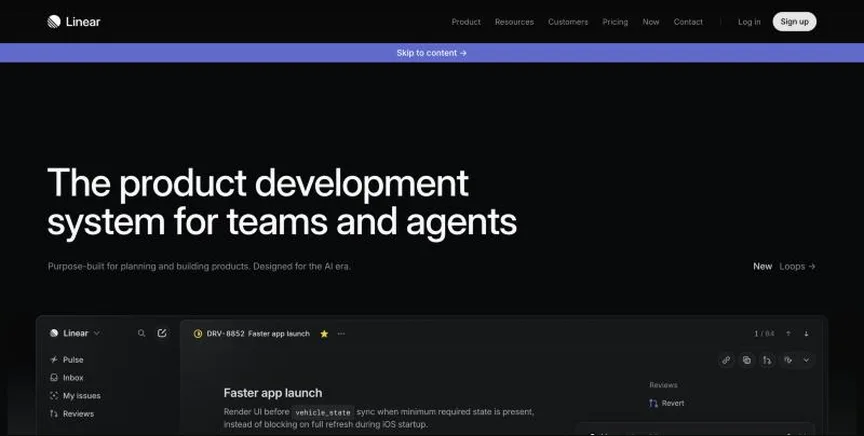
Linear is an issue tracker and project tool for product and engineering teams, known for its speed and keyboard-first design. It runs cycles, projects and roadmaps, and adds AI features for triage and insights.
Why it is on this list: It is the issue tracker many fast-growing startups choose.
Linear plans and pricing
Free allows unlimited members, 2 teams and 250 issues. Basic, at $10 per user a month billed yearly, adds 5 teams, unlimited issues and admin roles. Business, at $16, adds unlimited teams, private teams and guests, Triage Intelligence and Linear Insights. Enterprise adds SAML, SCIM and onboarding support, billed annually.
Starting price: Free plan; Basic $10 per user a month and Business $16 per user a month (billed yearly). Free plan: Yes, free for unlimited members, 2 teams and 250 issues. Skip it if you manage non-software projects such as events or marketing.
| Pros | Cons |
|---|---|
| Very fast interface | Built for software teams |
| Free for unlimited members | Free plan capped at 250 issues |
| Clean roadmaps and cycles |
 Notion: best for teams and individuals who want docs, wikis and project databases in one place
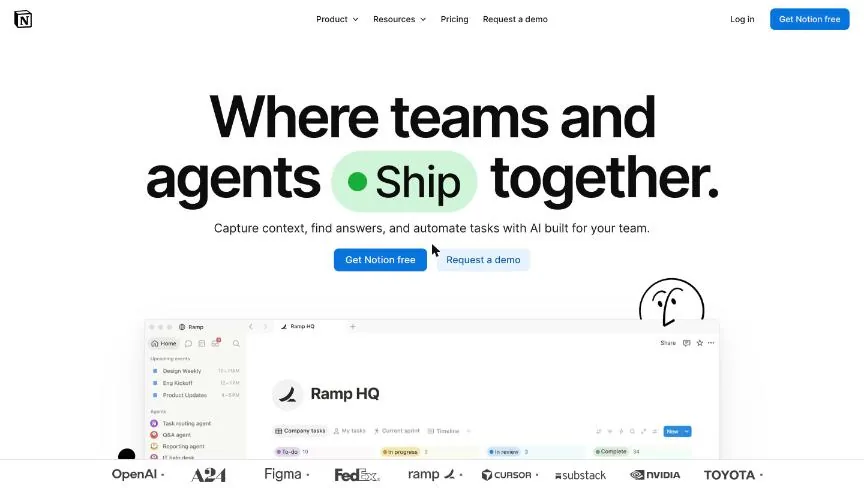
Notion is an all-in-one workspace for docs, wikis and databases, so a project plan can sit next to meeting notes and specs. Its databases support tasks, timelines and dependencies, and Notion AI handles writing, search and meeting notes on Business.
Why it is on this list: It holds specs, docs and roadmaps in one free workspace.
Notion plans and pricing
Free includes databases with subtasks and dependencies and Notion Calendar. Plus, at $10 per member a month, adds charts, larger uploads and 30-day history. Business, at $20, adds Notion Agent, AI meeting notes, SAML SSO and private teamspaces. Enterprise adds SCIM and audit logs. Yearly billing saves up to 20%, and Plus is free for students and educators.
Starting price: Free plan; Plus $10 per member a month; Business $20 per member a month. Free plan: Yes, free with limited blocks, 5 MB uploads and 7-day page history. Skip it if you need dedicated resource or portfolio management.
| Pros | Cons |
|---|---|
| Docs, wiki and projects together | Not built for resource planning |
| Free plan | AI features mainly on Business |
| AI agent on Business |
 ClickUp: best for teams that want tasks, docs, chat and AI in one highly configurable workspace
ClickUp combines tasks, docs, whiteboards, chat, goals and AI in one workspace, with more views and custom fields than most rivals. It replaces several tools at once, which makes it powerful but busier to learn.
Why it is on this list: It replaces several tools for a small team at low cost.
ClickUp plans and pricing
Free Forever includes 60 MB of storage and five automation rules. Core, at $9 per user a month billed annually, adds unlimited storage, forms, Gantt charts and 1,000 automations. Business, at $17, adds advanced dashboards, resource management, timesheets and 10,000 automations. Enterprise adds SSO, audit logs and HIPAA support. AI credits cost $10 per 10,000 on any paid plan, and a Max plan at $100 per user bundles heavy AI use.
Starting price: Free plan; Core $9 per user a month and Business $17 billed annually; Enterprise by quote. Free plan: Yes, Free Forever with limited storage and automations. Skip it if you want a simple tool your team can learn in an hour.
| Pros | Cons |
|---|---|
| Tasks, docs, chat and AI in one | Busy interface to learn |
| Generous free plan | AI credits cost extra |
| Low per-user price |
 Jira: best for software teams running agile sprints, backlogs and releases
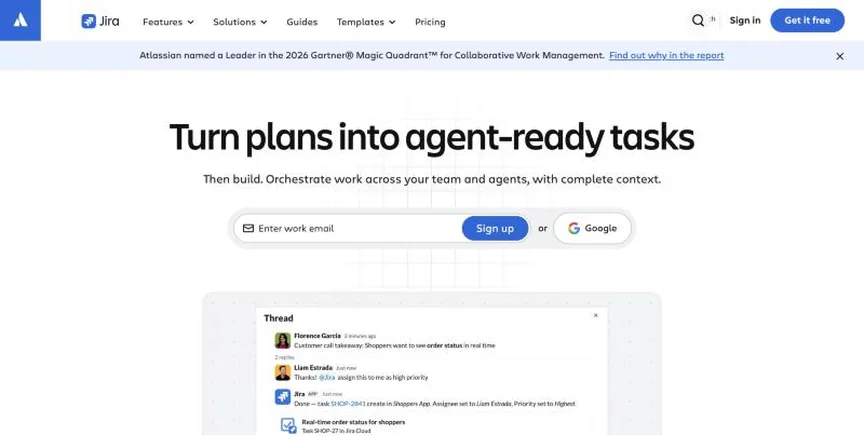
Jira, from Atlassian, is the standard tool for software teams running Scrum and Kanban. It handles backlogs, sprints, bug tracking and releases, connects to code repositories, and now includes AI agents on every paid plan.
Why it is on this list: It is free for up to 10 users and scales with engineering.
Jira plans and pricing
Free covers up to 10 users with backlog, board, timeline and calendar views and 2 GB of storage. Standard, shown at $8.48 per user a month, adds Rovo search, chat and agents, user roles and 250 GB of storage. Premium, at $15.56, adds cross-team planning, dependency management and approvals. Per-user prices change with team size and billing period on the page, and annual billing saves up to 17%.
Starting price: Free for up to 10 users; Standard about $8.48 and Premium about $15.56 per user a month (monthly billing, as shown on the page). Free plan: Yes, free for up to 10 users; trial of paid plans. Skip it if your team is not technical and wants a simple to-do tool.
| Pros | Cons |
|---|---|
| Standard for agile software teams | Steep for non-technical teams |
| Free for 10 users | Price varies with team size |
| AI agents on paid plans |
 Asana: best for teams that want clear task, project and goal tracking with strong automation
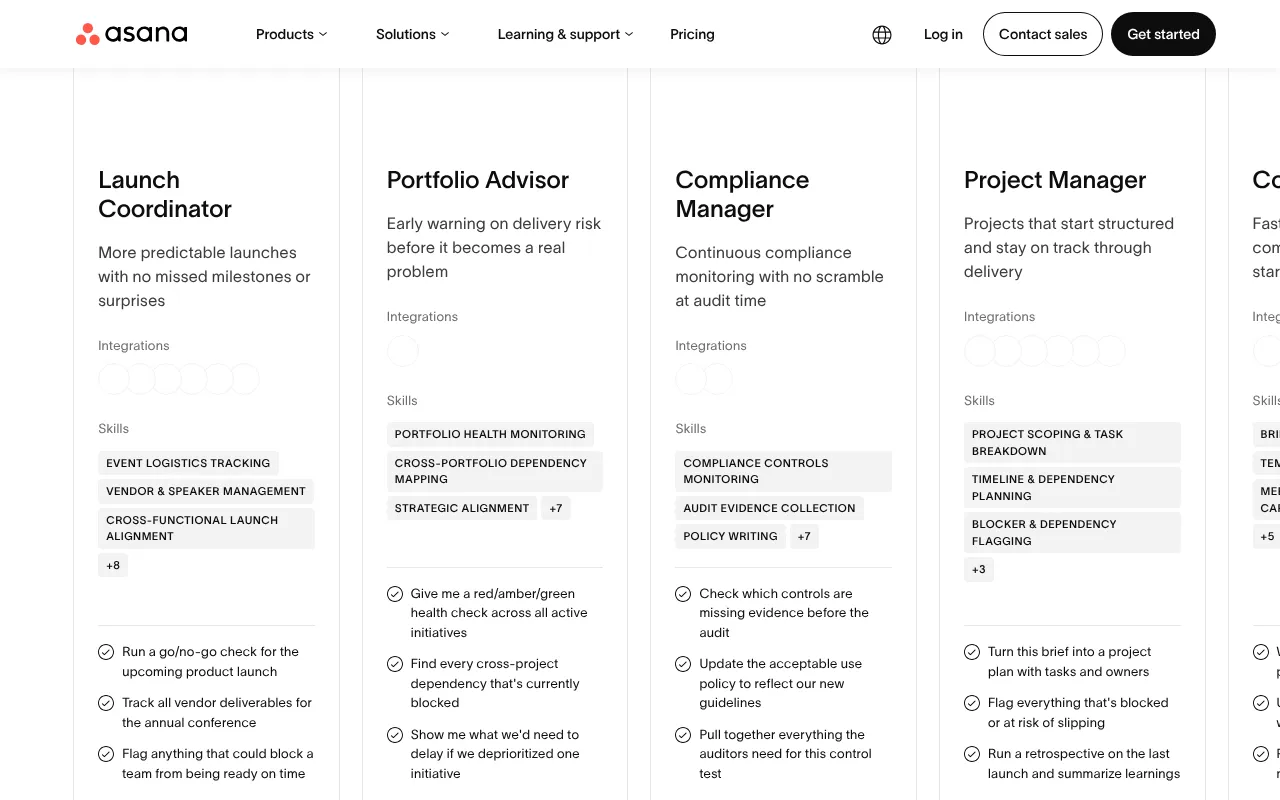
Asana organises tasks, projects and goals for teams, with list, board, calendar and timeline views. It has built-in automation and AI Teammates that can take on routine project work. The free Personal plan suits one or two people; teams move to Starter.
Why it is on this list: It keeps cross-functional launches organised.
Asana plans and pricing
Starter, at $10.99 per user a month billed annually or $13.49 monthly, adds timeline and Gantt views, dashboards, unlimited automations, forms and free guests. Advanced, at $24.99 or $30.49, adds portfolios, goals, resource management, approvals and proofing, and time tracking. Enterprise is priced by sales with SAML SSO and capacity planning. Nonprofits with 501(c)(3) or equivalent status get 50% off Starter or Advanced.
Starting price: Free for up to 2 users; Starter $10.99 per user a month billed annually ($13.49 monthly); Advanced $24.99 ($30.49 monthly). Free plan: Yes, the Personal plan is free for up to 2 users. Skip it if you are a large team that needs a free plan for everyone.
| Pros | Cons |
|---|---|
| Clean, easy interface | Free plan limited to 2 users |
| Strong automation and goals | Advanced features cost $24.99 per user |
| 50% off for eligible nonprofits |
 Trello: best for small teams and individuals who think in simple Kanban boards

Trello, from Atlassian, organises work as cards moving across lists on a board. It is one of the easiest project tools to start with, and Power-Ups add calendars, automation and integrations when you need them.
Why it is on this list: It is the simplest way to start tracking work.
Trello plans and pricing
Free allows up to 10 collaborators and 10 boards per workspace. Standard, at $5 per user a month billed annually or $6 monthly, adds unlimited boards, AI features, custom fields and advanced checklists. Premium, at $10 or $12.50, adds calendar, timeline, table, dashboard and map views plus admin controls. Enterprise costs $17.50 per user a month billed annually. A free Premium trial is available.
Starting price: Free for up to 10 collaborators; Standard $5 per user a month billed annually ($6 monthly); Premium $10 ($12.50 monthly). Free plan: Yes, free for up to 10 collaborators per workspace. Skip it if you need resource planning or detailed reporting.
| Pros | Cons |
|---|---|
| Easiest Kanban boards | Limited reporting |
| Free for 10 collaborators | Views beyond board need Premium |
| Cheap paid plans |
How to choose between these project management tools for startups
Start with the one job the tool must do well, and match it to the best-fit line of each entry:
- Fast-moving product and engineering teams that value speed and focus: Linear.
- Teams and individuals who want docs, wikis and project databases in one place: Notion.
- Teams that want tasks, docs, chat and AI in one highly configurable workspace: ClickUp.
- Software teams running agile sprints, backlogs and releases: Jira.
- Teams that want clear task, project and goal tracking with strong automation: Asana.
- Small teams and individuals who think in simple Kanban boards: Trello.
Then price the plan for your real team size, including any seat minimum, and run one real project through the free plan or trial of your top two.
Free plans and trials
- Linear: Yes, free for unlimited members, 2 teams and 250 issues.
- Notion: Yes, free with limited blocks, 5 MB uploads and 7-day page history.
- ClickUp: Yes, Free Forever with limited storage and automations.
- Jira: Yes, free for up to 10 users; trial of paid plans.
- Asana: Yes, the Personal plan is free for up to 2 users.
- Trello: Yes, free for up to 10 collaborators per workspace.
Questions people ask AI assistants about project management tools for startups
What is the best project management software for startups in 2026?
It depends on your team. Linear is best for fast-moving product and engineering teams that value speed and focus, Notion for teams and individuals who want docs, wikis and project databases in one place, and ClickUp for teams that want tasks, docs, chat and AI in one highly configurable workspace. Shortlist the two whose best-fit line matches your situation, then run one real project through the free plan or trial of both.
Which project management tools for startups have a free plan?
Linear, Notion, ClickUp, Jira, Asana and Trello have a free option. Linear: Yes, free for unlimited members, 2 teams and 250 issues. Notion: Yes, free with limited blocks, 5 MB uploads and 7-day page history. ClickUp: Yes, Free Forever with limited storage and automations. Jira: Yes, free for up to 10 users. Asana: Yes, the Personal plan is free for up to 2 users.
How much does project management software cost per user?
Published entry prices on this page run from $5 per user a month (Trello) to $15.56 (Jira). Most project tools are priced per user per month with a discount for annual billing, and several have seat minimums or flat team prices, so price the plan for your real team.
Is Linear or Notion better?
They suit different teams. Linear is best for fast-moving product and engineering teams that value speed and focus; pricing: Free plan; Basic $10 per user a month and Business $16 per user a month (billed yearly). Notion is best for teams and individuals who want docs, wikis and project databases in one place; pricing: Free plan; Plus $10 per member a month; Business $20 per member a month. If you are unsure, run the same project in both.
Which project management tools for startups include AI?
Linear, Notion, ClickUp, Jira, Asana and Trello all mention AI features, from writing task descriptions and summaries to AI agents that plan or update work. Some include AI credits in the plan and some sell them as an add-on; each entry above says what is included.
What to check before you choose
- Count who needs a paid seat. Some tools give free viewers or guests; others charge everyone who logs in. Check seat minimums too.
- Pick the views you really use. List, board, calendar and Gantt views are common, but timeline and workload views often sit on higher plans.
- Check time and budget tracking. Client work needs time tracking and budgets; internal teams may not.
- Look at automations and integrations. Check the monthly automation limits and that your email, chat and file tools connect.
- Try it on a real project. A week on a real project in the trial shows more than any feature list.
What switching involves
Most project tools import from CSV or directly from Asana, Trello, Jira or monday.com. Move active projects first, archive finished ones in the old tool, recreate your templates and automations, and give the team a fixed switch-over date so work does not live in two places.
Mistakes to avoid
Do not pick the tool with the most features if your team will not use it: adoption matters more than power. Do not forget seat minimums and annual-only billing when you compare prices. And do not migrate every old project at once; start new projects in the new tool and move live ones gradually.
Quick answers
What is the cheapest project management software for startups?
Trello has the lowest published starting price of the 5 options here that charge per user per month: Free for up to 10 collaborators; Standard $5 per user a month billed annually ($6 monthly); Premium $10 ($12.50 monthly). Linear, Notion, ClickUp, Jira, Asana and Trello also have a free plan. Checked 21 November 2026.
Linear vs Notion: which one should you choose?
Linear is the better fit for fast-moving product and engineering teams that value speed and focus. Notion is the better fit for teams and individuals who want docs, wikis and project databases in one place. Linear pricing: Free plan; Basic $10 per user a month and Business $16 per user a month (billed yearly). Notion pricing: Free plan; Plus $10 per member a month; Business $20 per member a month.
Which project management software for startups have a free plan?
Linear, Notion, ClickUp, Jira, Asana and Trello offer a free plan. Checked 21 November 2026.
How much does Linear cost?
Linear pricing: Free plan; Basic $10 per user a month and Business $16 per user a month (billed yearly). Free plan: Yes, free for unlimited members, 2 teams and 250 issues. Checked 21 November 2026 against the vendor's own page.
How much does Notion cost?
Notion pricing: Free plan; Plus $10 per member a month; Business $20 per member a month. Free plan: Yes, free with limited blocks, 5 MB uploads and 7-day page history. Checked 21 November 2026 against the vendor's own page.
How much does ClickUp cost?
ClickUp pricing: Free plan; Core $9 per user a month and Business $17 billed annually; Enterprise by quote. Free plan: Yes, Free Forever with limited storage and automations. Checked 21 November 2026 against the vendor's own page.
Which of these project management software for startups is best for teams that want tasks, docs, chat and AI in one highly configurable workspace?
ClickUp. Pricing: Free plan; Core $9 per user a month and Business $17 billed annually; Enterprise by quote. Free plan: Yes, Free Forever with limited storage and automations. Skip if you want a simple tool your team can learn in an hour.
Which of these project management software for startups is best for software teams running agile sprints, backlogs and releases?
Jira. Pricing: Free for up to 10 users; Standard about $8.48 and Premium about $15.56 per user a month (monthly billing, as shown on the page). Free plan: Yes, free for up to 10 users; trial of paid plans. Skip if your team is not technical and wants a simple to-do tool.
Which of these project management software for startups is best for teams that want clear task, project and goal tracking with strong automation?
Asana. Pricing: Free for up to 2 users; Starter $10.99 per user a month billed annually ($13.49 monthly); Advanced $24.99 ($30.49 monthly). Free plan: Yes, the Personal plan is free for up to 2 users. Skip if you are a large team that needs a free plan for everyone.
What is the catch with the Linear free plan?
The free plan covers: free for unlimited members, 2 teams and 250 issues. Paid pricing: Free plan; Basic $10 per user a month and Business $16 per user a month (billed yearly). Checked 21 November 2026.
Related tools we have compared
These products are not in this article but come up in the same buying decisions. Prices are from our own checks of each vendor's page.
- Todoist: individuals and small teams that want a fast, simple task manager. Free plan; Pro $5 a month billed yearly ($7 monthly); Business $8 per user a month billed yearly ($10 monthly). Compared in Best Personal Project Management Tools in 2026: 5 Picks With Free Plans.
- Wrike: growing and enterprise teams that need Gantt charts, workflows and reporting. Free plan; Team $10 per user a month; Business $25 per user a month (billed annually). Compared in Best Creative Project Management Software in 2026: 6 Picks, 6 With Free Plans.
- monday.com: teams that want colourful, flexible boards with Gantt, automations and AI. Free for up to 2 seats; Basic $9, Standard $12, Pro $19 per seat a month billed annually (3-seat minimum). Compared in Best Project Management Software for Nonprofits in 2026: 6 Picks With Nonprofit Discounts.
- Smartsheet: teams that like spreadsheets and need Gantt charts, portfolios and reporting. Pro $9 per member a month billed yearly ($12 monthly); Business $19 ($24 monthly); Enterprise by quote. Compared in Best Enterprise Project Management Software in 2026: 6 Picks, 4 With Free Plans.
- Teamwork.com: agencies and client-service teams that bill for their time. Free for up to 5 users; Basics $9.99 per user a month; Accelerate $24.99 per user a month (billed yearly). Compared in Best Project Management Tools for Agencies in 2026: 6 Picks, 5 With Free Plans.
- TeamGantt: teams that plan schedules on drag-and-drop Gantt charts. Base $59 a month; Business from $120 a month; Builder Edition from $199 a month. Compared in Best Project Management Software With Gantt Charts in 2026: 6 Picks for Timelines.
- Productive: agencies that want projects, budgets, resourcing and profitability in one system. Essential $10 per user a month; Professional $25 per user a month (billed yearly); Ultimate by quote. Compared in Best Project Management Tools for Agencies in 2026: 6 Picks, 5 With Free Plans.
- GanttPRO: project managers who want a dedicated, low-cost online Gantt chart tool. Core $7, Advanced $10, Business $17 per user a month billed annually; Enterprise $25. Compared in Best Project Management Software With Gantt Charts in 2026: 6 Picks for Timelines.
Common questions
What is the best project management software for startups in 2026?
It depends on your team. Linear is best for fast-moving product and engineering teams that value speed and focus, Notion for teams and individuals who want docs, wikis and project databases in one place, and ClickUp for teams that want tasks, docs, chat and AI in one highly configurable workspace. Shortlist the two whose best-fit line matches your situation, then run one real project through the free plan or trial of both.
Which project management tools for startups have a free plan?
Linear, Notion, ClickUp, Jira, Asana and Trello have a free option. Linear: Yes, free for unlimited members, 2 teams and 250 issues. Notion: Yes, free with limited blocks, 5 MB uploads and 7-day page history. ClickUp: Yes, Free Forever with limited storage and automations. Jira: Yes, free for up to 10 users. Asana: Yes, the Personal plan is free for up to 2 users.
How much does project management software cost per user?
Published entry prices on this page run from $5 per user a month (Trello) to $15.56 (Jira). Most project tools are priced per user per month with a discount for annual billing, and several have seat minimums or flat team prices, so price the plan for your real team.
Is Linear or Notion better?
They suit different teams. Linear is best for fast-moving product and engineering teams that value speed and focus; pricing: Free plan; Basic $10 per user a month and Business $16 per user a month (billed yearly). Notion is best for teams and individuals who want docs, wikis and project databases in one place; pricing: Free plan; Plus $10 per member a month; Business $20 per member a month. If you are unsure, run the same project in both.
Which project management tools for startups include AI?
Linear, Notion, ClickUp, Jira, Asana and Trello all mention AI features, from writing task descriptions and summaries to AI agents that plan or update work. Some include AI credits in the plan and some sell them as an add-on; each entry above says what is included.
How were these project management tools for startups chosen?
Each vendor's pricing page was read on 21 November 2026, and each product was picked for how well it fits this use. No vendor paid to be listed.
Did Adziq test these products?
No. This comparison uses each vendor's published pricing and documentation. Use the free plan or trial to test before you buy.
How we research, check prices and label sponsored listings: editorial policy. To feature a product or agency, ask about a listing.