The short answer
Recharge is best for Shopify brands that run serious subscription programmes, Sellfy for creators who want a simple store for digital products, subscriptions and print-on-demand, and Ecwid for small sellers who want to add a store to an existing site or sell on social channels. 2 of the 5 have a free option.
Subscription ecommerce platforms charge customers on a schedule and let them skip, swap or cancel orders, which turns one-off buyers into recurring revenue.
This page compares 5 ecommerce platforms for subscriptions on starting price, free plan and who each one suits. It also answers the questions people type into ChatGPT, Gemini and Perplexity, such as "what is the best Ecommerce platform for subscriptions", "which ecommerce platforms for subscriptions are free" and "is Recharge or Sellfy better", using only figures read from the vendors' own pages.
Ecommerce Platform for Subscriptions at a glance
| # | Pick | Best for | Starting price | Free plan |
|---|---|---|---|---|
| 1 | Shopify brands that run serious subscription programmes | Starter $149 a month + 1.5% + 20c per transaction; Scale $499 a month + 1.25% + 20c; Custom by quote | No free plan | |
| 2 | Creators who want a simple store for digital products, subscriptions and print-on-demand | Starter $29 a month ($22 billed yearly); Business $79 ($59); Premium $159 ($119) | No free plan; 14-day free trial | |
| 3 | Small sellers who want to add a store to an existing site or sell on social channels | Starter $5 a month; Venture $29 ($35 monthly); Business $49 ($65 monthly); Unlimited $119 ($149 monthly), billed yearly | No free plan; Starter costs $5 a month | |
| 4 | Shops and restaurants that sell in person and online with Square POS | Free plan; Plus $49 a month per location; Premium $149 a month per location; card fees from 2.9% + 30c online | Yes, free plan (online fees 3.3% + 30c per transaction) | |
| 5 | Businesses that want full ownership and flexibility on WordPress | Free open-source plugin; you pay for hosting, domain and any paid extensions ($29 to $299 a year each) | Yes, the core plugin is free |
How we chose
Every price, plan limit and feature on this page was read from each vendor's own pricing page on 21 November 2026. We chose these 5 ecommerce platforms for subscriptions for how well they fit this use, not for who pays: no vendor paid to be listed, and the order is not a ranking by price. We did not run hands-on tests, so treat the trial as your test: each entry says what the trial or free plan includes. Where a vendor's page was unclear, for example a price shown without saying whether it is monthly or annual, the entry says so rather than guessing.
 Recharge: best for Shopify brands that run serious subscription programmes
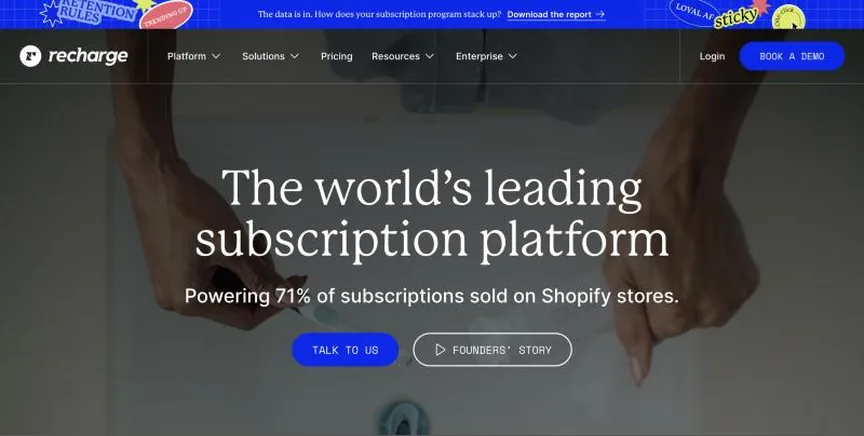
Recharge is a subscription platform for ecommerce brands, mainly on Shopify. It manages recurring orders, customer portals, retention offers and analytics for subscription products.
Why it is on this list: It is the leading subscription app for Shopify brands.
Recharge plans and pricing
Starter costs $149 a month plus 1.5% and 20 cents per transaction. Scale costs $499 a month plus 1.25% and 20 cents. Custom plans have volume-based rates through sales.
Starting price: Starter $149 a month + 1.5% + 20c per transaction; Scale $499 a month + 1.25% + 20c; Custom by quote. Free plan: No free plan. Skip it if you have only a handful of subscribers.
| Pros | Cons |
|---|---|
| Leading Shopify subscription app | Expensive for small brands |
| Retention tools | Transaction fees on top |
| Customer portal |
 Sellfy: best for creators who want a simple store for digital products, subscriptions and print-on-demand
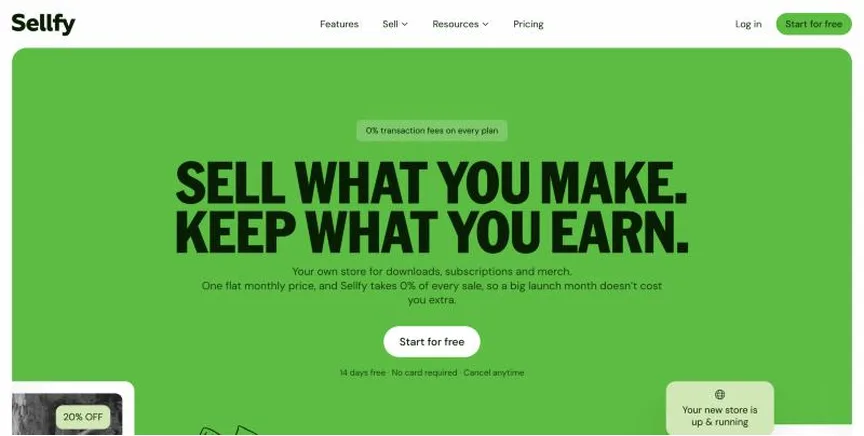
Sellfy is an ecommerce platform for creators. It sells digital downloads, subscriptions, physical products and print-on-demand merchandise from one simple store with built-in email marketing.
Why it is on this list: It sells subscriptions without extra Sellfy fees.
Sellfy plans and pricing
Starter costs $29 a month ($22 billed yearly) for up to $10,000 in yearly sales, Business $79 ($59 yearly) for up to $50,000, and Premium $159 ($119 yearly) for up to $200,000. There is no transaction fee from Sellfy, but going over your limit can add a 2% fee. Every plan has a 14-day free trial.
Starting price: Starter $29 a month ($22 billed yearly); Business $79 ($59); Premium $159 ($119). Free plan: No free plan; 14-day free trial. Skip it if you sell more than $200,000 a year.
| Pros | Cons |
|---|---|
| No Sellfy transaction fees | Yearly sales caps |
| Print-on-demand built in | No free plan |
| Simple setup |
 Ecwid: best for small sellers who want to add a store to an existing site or sell on social channels
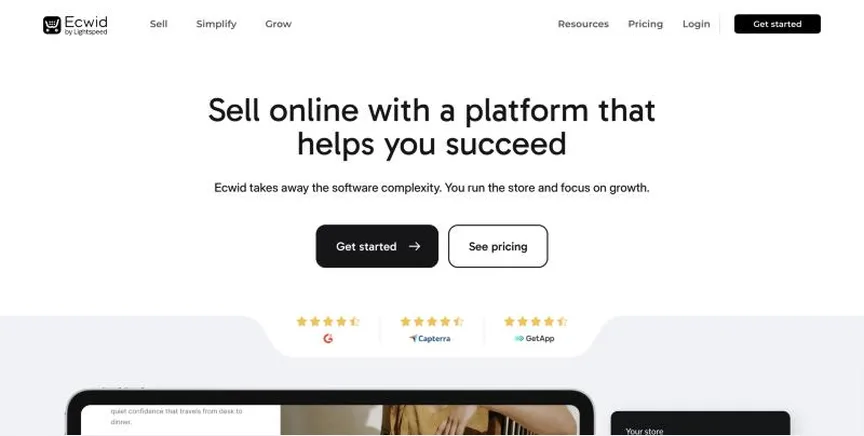
Ecwid by Lightspeed is an ecommerce platform that adds a store to any website, or gives you a simple store site of its own. You can sell on Instagram, Facebook and marketplaces, and higher plans add subscriptions and wholesale pricing.
Why it is on this list: Its Business plan adds subscriptions cheaply.
Ecwid plans and pricing
Billed yearly, Starter costs $5 a month for up to 10 products, Venture $29 for up to 100 products, Business $49 for up to 2,500 products and Unlimited $119. Monthly billing costs $5, $35, $65 and $149. Business adds marketplace selling, subscriptions and wholesale pricing groups; Unlimited adds POS selling.
Starting price: Starter $5 a month; Venture $29 ($35 monthly); Business $49 ($65 monthly); Unlimited $119 ($149 monthly), billed yearly. Free plan: No free plan; Starter costs $5 a month. Skip it if you need deep customisation of the store front.
| Pros | Cons |
|---|---|
| Adds a store to any site | Product limits by plan |
| Cheap Starter plan | Limited store design |
| Social and marketplace selling |
 Square Online: best for shops and restaurants that sell in person and online with Square POS
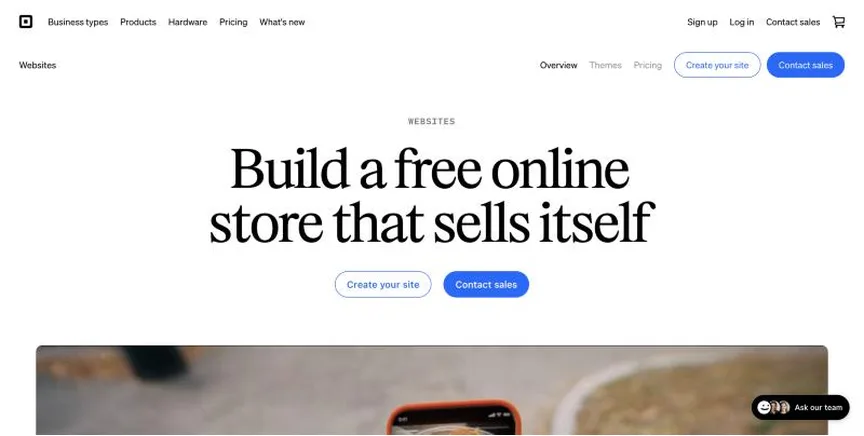
Square Online is a store builder from Square that shares inventory, orders and customers with Square's point-of-sale system. It supports pickup, local delivery and shipping, and it can sell on search and social channels.
Why it is on this list: Its Plus plan adds subscriptions alongside POS.
Square Online plans and pricing
The free plan includes the online store builder with SEO tools; online card payments cost 3.3% plus 30 cents. Plus costs $49 a month per location and Premium $149, with online processing at 2.9% plus 30 cents. Plus adds subscriptions and QR code ordering. Businesses processing over $250,000 a year can ask about custom pricing.
Starting price: Free plan; Plus $49 a month per location; Premium $149 a month per location; card fees from 2.9% + 30c online. Free plan: Yes, free plan (online fees 3.3% + 30c per transaction). Skip it if you sell only online and need advanced store design.
| Pros | Cons |
|---|---|
| Free plan | Fees per location |
| Ties into Square POS | Basic design options |
| Pickup and local delivery |
 WooCommerce: best for businesses that want full ownership and flexibility on WordPress
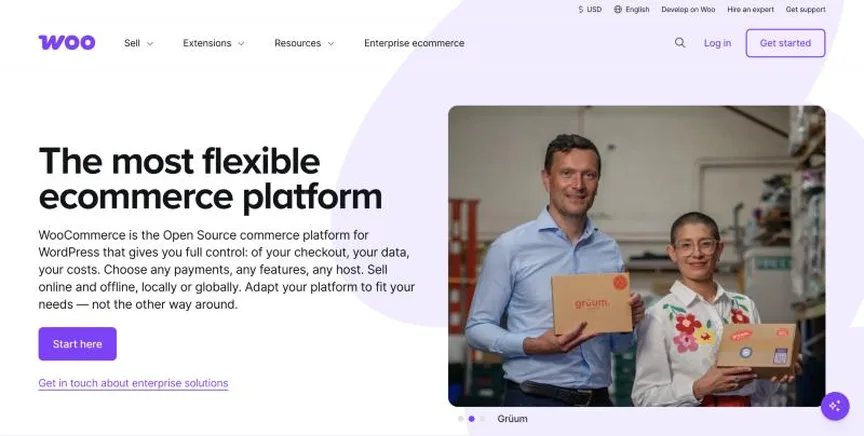
WooCommerce is a free, open-source ecommerce plugin for WordPress. It powers stores of every size and can be extended with thousands of free and paid extensions, from subscriptions to B2B pricing.
Why it is on this list: A paid extension adds subscriptions on WordPress.
WooCommerce plans and pricing
The WooCommerce plugin is free with no monthly subscription. You pay for hosting (WooCommerce puts most stores at $25 to $350 a month), a domain and any paid extensions, which cost $29 to $299 a year each. WooPayments charges about 2.5% to 2.9% plus 30 cents per transaction, according to WooCommerce.
Starting price: Free open-source plugin; you pay for hosting, domain and any paid extensions ($29 to $299 a year each). Free plan: Yes, the core plugin is free. Skip it if you do not want to manage hosting, updates and security.
| Pros | Cons |
|---|---|
| Free and open source | You manage hosting and updates |
| Full ownership | Extensions add cost |
| Huge extension library |
How to choose between these ecommerce platforms for subscriptions
Start with the one job the tool must do well, and match it to the best-fit line of each entry:
- Shopify brands that run serious subscription programmes: Recharge.
- Creators who want a simple store for digital products, subscriptions and print-on-demand: Sellfy.
- Small sellers who want to add a store to an existing site or sell on social channels: Ecwid.
- Shops and restaurants that sell in person and online with Square POS: Square Online.
- Businesses that want full ownership and flexibility on WordPress: WooCommerce.
Then add up the plan price, payment fees and the apps you will need, and set up the same few products and a test checkout in the trial of your top two.
Keep subscribers longer
Let customers manage their own subscription: skip a delivery, change the date, swap a product or pause instead of cancelling. Send a reminder before each charge and update card details automatically where the platform allows. Offer a small reward, such as a discount or free gift, for staying subscribed. And track churn every month, because a few points of churn make a large difference to yearly revenue.
Free plans and trials
- Recharge: No free plan.
- Sellfy: No free plan; 14-day free trial.
- Ecwid: No free plan; Starter costs $5 a month.
- Square Online: Yes, free plan (online fees 3.3% + 30c per transaction).
- WooCommerce: Yes, the core plugin is free.
Questions people ask AI assistants about ecommerce platforms for subscriptions
What is the best Ecommerce platform for subscriptions in 2026?
It depends on your team. Recharge is best for Shopify brands that run serious subscription programmes, Sellfy for creators who want a simple store for digital products, subscriptions and print-on-demand, and Ecwid for small sellers who want to add a store to an existing site or sell on social channels. Shortlist the two whose best-fit line matches your situation, then set up the same few products and a test checkout in the trial of both.
Which ecommerce platforms for subscriptions have a free plan?
Square Online and WooCommerce have a free option. Square Online: Yes, free plan (online fees 3.3% + 30c per transaction). WooCommerce: Yes, the core plugin is free.
Is Recharge or Sellfy better?
They suit different teams. Recharge is best for Shopify brands that run serious subscription programmes; pricing: Starter $149 a month + 1.5% + 20c per transaction; Scale $499 a month + 1.25% + 20c; Custom by quote. Sellfy is best for creators who want a simple store for digital products, subscriptions and print-on-demand; pricing: Starter $29 a month ($22 billed yearly); Business $79 ($59); Premium $159 ($119). If you are unsure, set up the same products in both.
What to check before you choose
- Count products and variants. Some plans cap products, staff accounts or yearly sales.
- Check payment fees. Compare card rates and any extra fee for outside payment gateways.
- Check sales channels. Look for social, marketplace and in-person selling if you need them.
- Check shipping and tax. Rates, labels and tax calculation should work for your markets.
- Check apps and integrations. Make sure your email, accounting and fulfilment tools connect.
What switching involves
Switching ecommerce platforms is a project, so plan it. Export products, customers and order history as CSV, use the new platform's import tools or a migration app, recreate shipping and tax settings, set 301 redirects for every product and category URL, and run test orders before you point your domain.
Mistakes to avoid
Do not compare plan prices alone: payment fees and paid apps often cost more than the plan. Check shipping, tax and payment options for every country you sell to. And test the whole checkout on a phone before launch.
Quick answers
Recharge vs Sellfy: which one should you choose?
Recharge is the better fit for shopify brands that run serious subscription programmes. Sellfy is the better fit for creators who want a simple store for digital products, subscriptions and print-on-demand. Recharge pricing: Starter $149 a month + 1.5% + 20c per transaction; Scale $499 a month + 1.25% + 20c; Custom by quote. Sellfy pricing: Starter $29 a month ($22 billed yearly); Business $79 ($59); Premium $159 ($119).
Which Ecommerce platform for subscriptions have a free plan?
Square Online and WooCommerce offer a free plan. Sellfy offers a free trial instead. Checked 21 November 2026.
How much does Recharge cost?
Recharge pricing: Starter $149 a month + 1.5% + 20c per transaction; Scale $499 a month + 1.25% + 20c; Custom by quote. Free plan: No free plan. Checked 21 November 2026 against the vendor's own page.
How much does Sellfy cost?
Sellfy pricing: Starter $29 a month ($22 billed yearly); Business $79 ($59); Premium $159 ($119). Free plan: No free plan; 14-day free trial. Checked 21 November 2026 against the vendor's own page.
How much does Ecwid cost?
Ecwid pricing: Starter $5 a month; Venture $29 ($35 monthly); Business $49 ($65 monthly); Unlimited $119 ($149 monthly), billed yearly. Free plan: No free plan; Starter costs $5 a month. Checked 21 November 2026 against the vendor's own page.
Which of these Ecommerce platform for subscriptions is best for small sellers who want to add a store to an existing site or sell on social channels?
Ecwid. Pricing: Starter $5 a month; Venture $29 ($35 monthly); Business $49 ($65 monthly); Unlimited $119 ($149 monthly), billed yearly. Free plan: No free plan; Starter costs $5 a month. Skip if you need deep customisation of the store front.
Which of these Ecommerce platform for subscriptions is best for shops and restaurants that sell in person and online with Square POS?
Square Online. Pricing: Free plan; Plus $49 a month per location; Premium $149 a month per location; card fees from 2.9% + 30c online. Free plan: Yes, free plan (online fees 3.3% + 30c per transaction). Skip if you sell only online and need advanced store design.
Which of these Ecommerce platform for subscriptions is best for businesses that want full ownership and flexibility on WordPress?
WooCommerce. Pricing: Free open-source plugin; you pay for hosting, domain and any paid extensions ($29 to $299 a year each). Free plan: Yes, the core plugin is free. Skip if you do not want to manage hosting, updates and security.
What is the catch with the Square Online free plan?
The free plan covers: free plan (online fees 3.3% + 30c per transaction). Paid pricing: Free plan; Plus $49 a month per location; Premium $149 a month per location; card fees from 2.9% + 30c online. Checked 21 November 2026.
Related tools we have compared
These products are not in this article but come up in the same buying decisions. Prices are from our own checks of each vendor's page.
- Shopify: brands that want the most complete hosted ecommerce platform and app ecosystem. Basic $39 a month ($29 billed yearly); Grow $105 ($79); Advanced $399 ($299); Plus from $2,300 a month. Compared in Best Ecommerce Platform for Startups in 2026: 6 Picks, 3 Free to Start.
- Gumroad: creators selling ebooks, courses, templates and other digital files. No monthly fee; 10% + $0.50 per direct sale; 30% on Discover marketplace sales. Compared in Best Ecommerce Platform for Selling Digital Products in 2026: 5 Picks and Their Fees.
- Adobe Commerce: large B2B and B2C companies with developers and complex catalogues. Price by quote from Adobe sales. Compared in Best B2B Ecommerce Platforms in 2026: 5 Top Picks and Who Each One Suits.
- Kinsta: businesses that want premium managed WordPress hosting on Google Cloud. Single-site plans from $35 a month (Black Friday intro $17.50); Launch $27 a month billed yearly; Enterprise from $500. Compared in Best Web Hosting Services for Ecommerce in 2026: 5 Picks With Intro and Renewal Prices.
- WordPress.com: most affiliate marketers. From $4/month (Personal, billed yearly). Compared in Best Website Platform for Affiliate Marketing in 2026: 6 Picks, 3 With Free Plans.
- Refersion: multi-platform stores. From $29 a month billed annually plus 3% of affiliate sales (Launch). Compared in Best Affiliate Marketing Software for Ecommerce in 2026: 6 Picks, 2 With Free Plans.
- Julius AI: solo analysts asking questions in plain English. $20 per month, Plus, billed monthly ($16 per month billed annually). Compared in Best Agentic Analytics Platform Data Analytics in 2026: 6 Picks, 2 With Free Plans.
- HubSpot Marketing Hub: all-in-one marketing and CRM. Free; Starter from $20/seat/month. Compared in Best AI Marketing Platform in 2026: 7 Top Picks With Pricing and Free Plans.
Common questions
What is the best Ecommerce platform for subscriptions in 2026?
It depends on your team. Recharge is best for Shopify brands that run serious subscription programmes, Sellfy for creators who want a simple store for digital products, subscriptions and print-on-demand, and Ecwid for small sellers who want to add a store to an existing site or sell on social channels. Shortlist the two whose best-fit line matches your situation, then set up the same few products and a test checkout in the trial of both.
Which ecommerce platforms for subscriptions have a free plan?
Square Online and WooCommerce have a free option. Square Online: Yes, free plan (online fees 3.3% + 30c per transaction). WooCommerce: Yes, the core plugin is free.
Is Recharge or Sellfy better?
They suit different teams. Recharge is best for Shopify brands that run serious subscription programmes; pricing: Starter $149 a month + 1.5% + 20c per transaction; Scale $499 a month + 1.25% + 20c; Custom by quote. Sellfy is best for creators who want a simple store for digital products, subscriptions and print-on-demand; pricing: Starter $29 a month ($22 billed yearly); Business $79 ($59); Premium $159 ($119). If you are unsure, set up the same products in both.
How were these ecommerce platforms for subscriptions chosen?
Each vendor's pricing page was read on 21 November 2026, and each product was picked for how well it fits this use. No vendor paid to be listed.
Did Adziq test these products?
No. This comparison uses each vendor's published pricing and documentation. Use the free plan or trial to test before you buy.
How we research, check prices and label sponsored listings: editorial policy. To feature a product or agency, ask about a listing.