The short answer
HubSpot suits free start with a big ecosystem, Pipedrive suits simpler pipeline for small teams, and Zoho CRM suits a low paid plan with automation. Attio pricing: $100 per month (Pro workspace, billed annually) plus $79 per extra user. HubSpot pricing: Free CRM; Sales Hub Starter from $20 per user per month. Pipedrive pricing: From $14 per user per month (Lite, billed annually). 2 of the 7 alternatives have a free plan.
Why look for a Attio alternative
Attio is the closest like-for-like replacement for the relationship map itself. It is an AI-native CRM built around custom objects and relationships, so a talent team can model candidates, clients, roles and introductions as linked records instead of forcing them into a sales pipeline. Setup takes hours rather than the weeks an admin-led rollout usually needs. Plus costs $40 a month for the workspace and first user plus $35 per extra user, and Pro costs $100 a month plus $79 per extra user, on annual billing. Pro adds custom objects and relationships, sequences, call intelligence and advanced reporting. Attio's difference is its data model: you define your own objects — companies, deals, investors, partners — instead of fitting your business into fixed lead and opportunity fields. The risk is youth: the integration library and template set are thinner than HubSpot's or Zoho's, and Pro costs more than twice Plus, largely for sequences and call recording. Skip Attio if you want a settled, template-driven CRM with a large marketplace on day one. Attio rewards teams that enjoy shaping their own system.
People usually switch for one of three reasons: the price at their size, a limit on the plan they are on, or a feature that sits on a higher tier. Attio's own figures, for reference: starting price $100 per month (Pro workspace, billed annually) plus $79 per extra user; free plan: Yes, free for up to 3 users.
Attio Alternatives at a glance
| # | Pick | Best for | Starting price | Free plan |
|---|---|---|---|---|
| 1 | Free start with a big ecosystem | Free CRM; Sales Hub Starter from $20 per user per month | Yes, free for up to 2 users | |
| 2 | Simpler pipeline for small teams | From $14 per user per month (Lite, billed annually) | No free plan; 14-day trial | |
| 3 | A low paid plan with automation | Free up to 3 users; Standard from $14 per user per month (billed annually) | Yes, free for up to 3 users | |
| 4 | Recruiting-built ATS and CRM | From $99 per user per month (Starter) | No | |
| 5 | Outbound teams that live on the phone | Essentials from $35 per user per month, billed annually ($49 billed monthly) | No, 14-day free trial | |
| 6 | Teams that live in Google Workspace | Basic from $23 per user per month, billed annually | No, 14-day free trial | |
| 7 | Budget-conscious teams needing built-in calling | Growth from $9 per user per month, billed annually | 21-day free trial |
How we chose
These are the products that Adziq compares side by side with Attio in Affinity CRM Talent Teams Alternatives: 6 Picks and 7 Best CRM Tools for B2B Startups: Prices and Picks. Prices and free-plan details were read from each vendor's pricing page and last checked on 2026-11-13. No hands-on testing was done. The order is not a ranking by price.
 HubSpot: best for free start with a big ecosystem
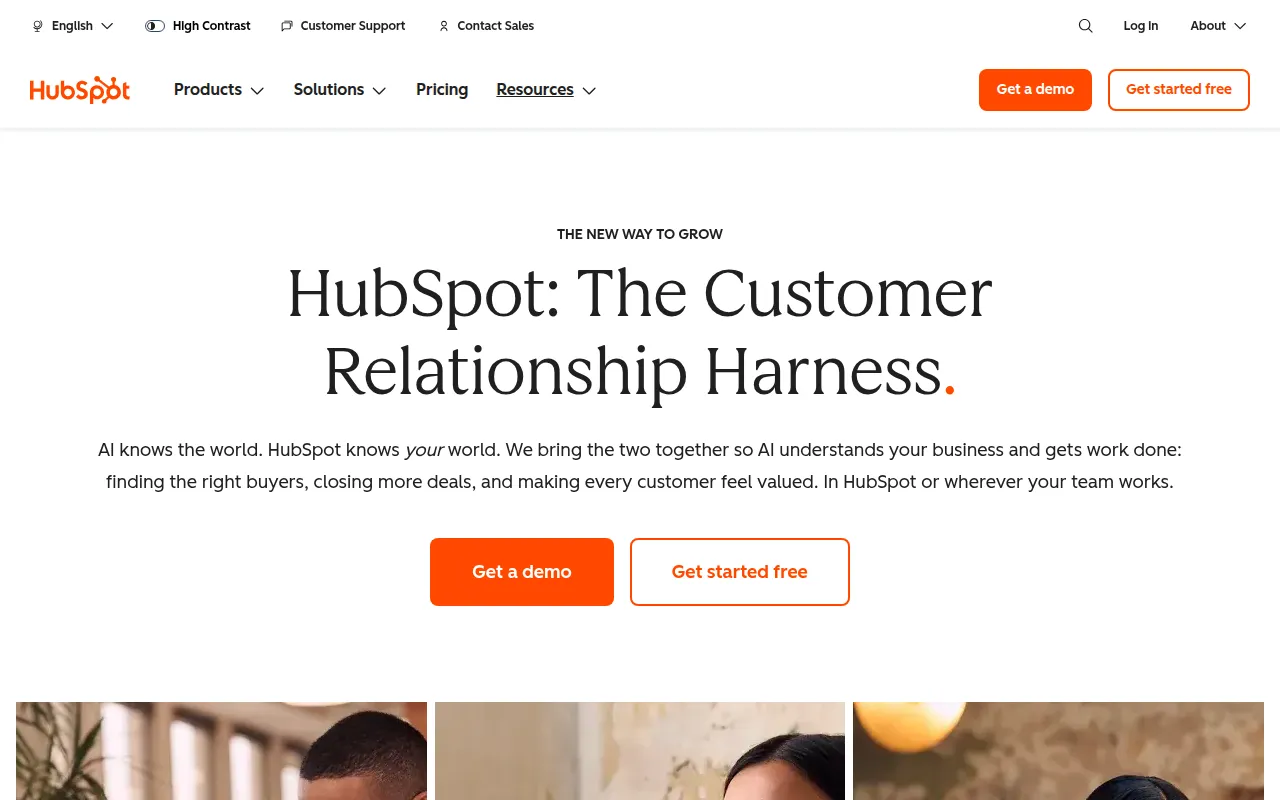
HubSpot's Sales Hub is free for up to 2 users. The free CRM covers up to 2 users with contact and deal tracking, meeting scheduling, email tracking and live chat. Sales Hub Starter lists at $20 per seat per month and adds sequences, calling and simple automation. Professional costs $90 per seat per month billed annually plus a required $1,500 one-time onboarding fee, and Enterprise starts at $150 per seat plus $3,500 onboarding. Skip HubSpot if the relationship map is the feature you use daily. Choose it if your team needs a standard CRM that plugs into everything else you run. It includes up to 1,000 fully customizable workflows, deal and quote approvals, predictive lead scoring, recurring revenue tracking, advanced permissions and 5,000 HubSpot Credits a month, which pay for AI agents and some automated features. HubSpot fits when marketing and sales share one system.
Starting price: Free CRM; Sales Hub Starter from $20 per user per month. Free plan: Yes, free for up to 2 users. Skip if you need more than 2 users on the free plan.
 Pipedrive: best for simpler pipeline for small teams
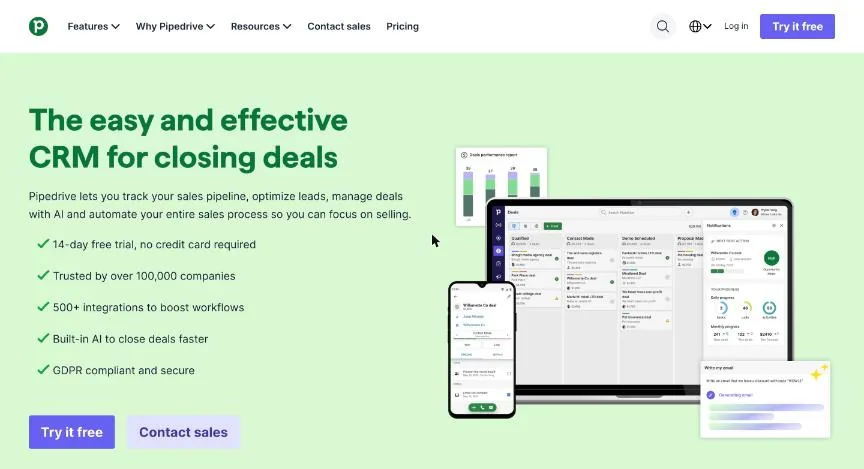
Pipedrive is a sales CRM built around a visual pipeline, and its appeal for a talent team is simplicity. Lite costs $14 per seat per month billed annually ($24 billed monthly) and covers pipelines, the leads inbox, contacts, calendar sync and mobile apps. Growth costs $39, Premium $59 and Ultimate $79 per seat per month billed annually. The honest limit is that Lite has no automations, no email sync and no sequences, so most teams will need Growth at $39 before the tool does real work. Add-ons such as lead capture and campaigns cost extra on every plan. You can view and manage leads, deals, contacts and calendar events, and the app supports the same deal stages you set up on desktop. Pipedrive fits a seller whose day is the pipeline: open the app, see what needs a nudge, log the call, move the deal. The weakness is the free tier, or rather the lack of one.
Starting price: From $14 per user per month (Lite, billed annually). Free plan: No free plan; 14-day trial. Skip if you need a free plan.
 Zoho CRM: best for a low paid plan with automation
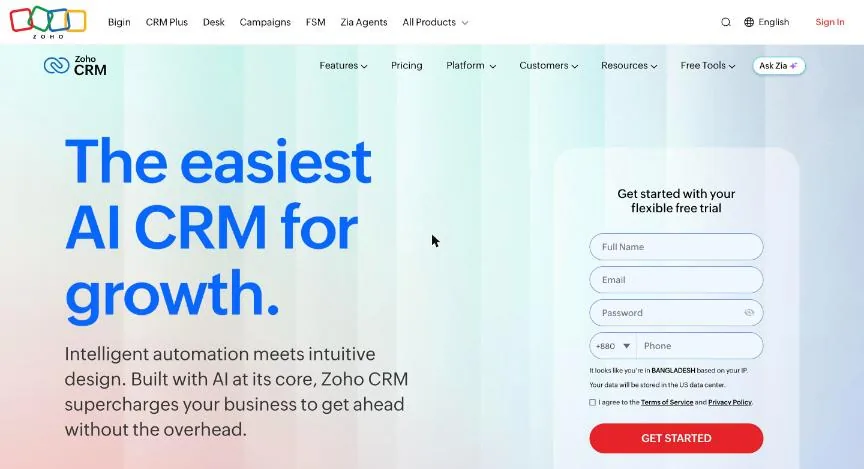
Zoho CRM is free for up to 3 users, and the paid ladder runs Standard at $14, Professional at $23, Enterprise at $40 and Ultimate at $52 per user per month on annual billing. Standard adds email integration, mass email, built-in calling, up to 5 pipelines, sales forecasting and custom modules. Monthly billing costs more, at $20 for Standard. Its weakness is the same as HubSpot's — no relationship intelligence, no warm-intro path, and an interface that takes more setup to feel like a talent tool rather than a generic sales CRM. Support tiers, storage and backup are priced separately, so check the licence calculator before you budget. Professional adds process management through Blueprint, CPQ, inventory and portals. Zoho wins on value per dollar and on breadth at low prices. The weakness is the learning curve: settings are spread across many screens, and support tiers and storage are priced separately, so the invoice can exceed the headline plan price. Skip Zoho if your team wants the simplest possible setup and will not use its wider app suite. Professional adds Blueprint process management, inventory, customer portals and more automation.
Starting price: Free up to 3 users; Standard from $14 per user per month (billed annually). Free plan: Yes, free for up to 3 users. Skip if you need more than 3 users on the free plan.
 Bullhorn: best for Recruiting-built ATS and CRM
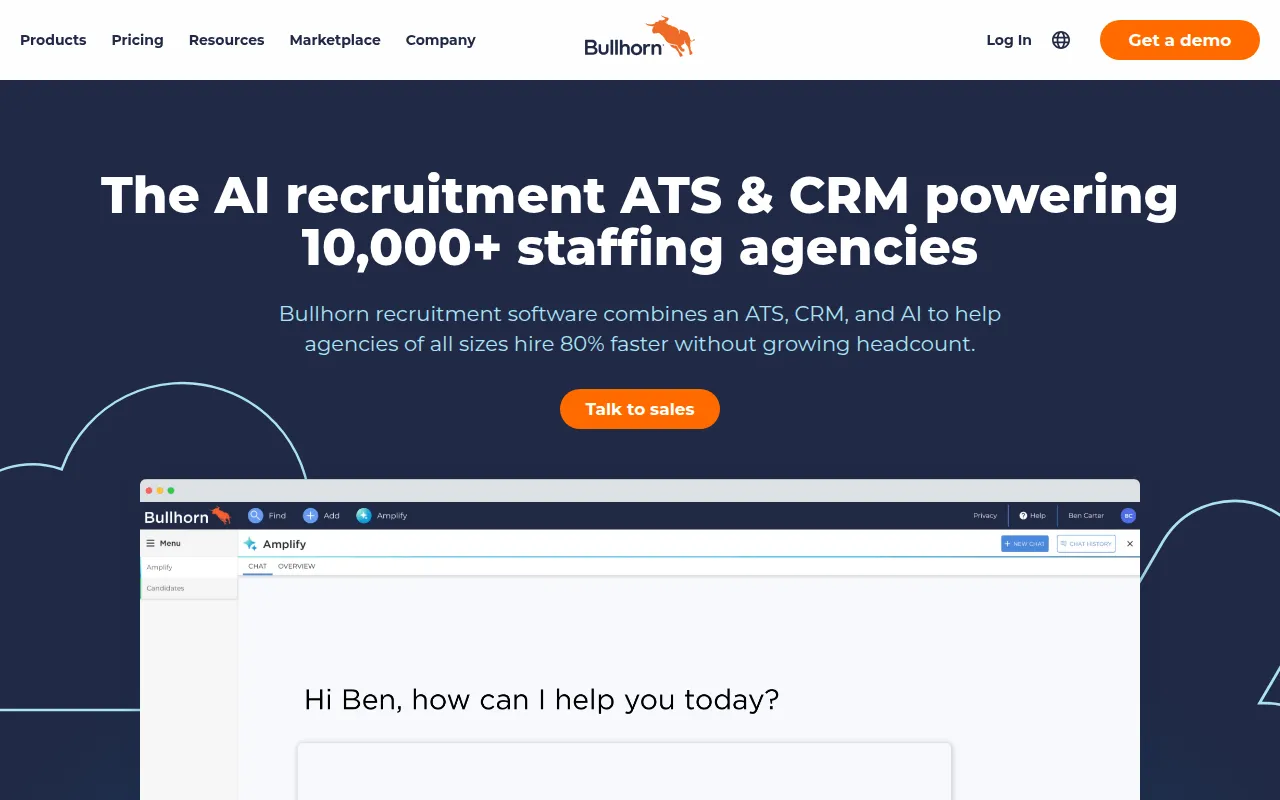
Bullhorn now publishes entry pricing, which it did not historically. It combines applicant tracking and recruitment CRM in one system, so business development and candidate work share the same records. That matters for a talent team: a candidate, a client and a placement live in one place instead of across a CRM and a separate ATS. Starter costs $99 per user per month and covers applicant tracking, resume parsing, client management and job posting with a career portal. Implementation is free on Starter, Core and Pro. The catch is that the recruitment CRM itself — the sales pipeline half — starts on the Pro tier, which is quote-only, as are Max and most add-ons.
Starting price: From $99 per user per month (Starter). Free plan: No. Skip if your budget is under $99 a month.
 Close: best for outbound teams that live on the phone
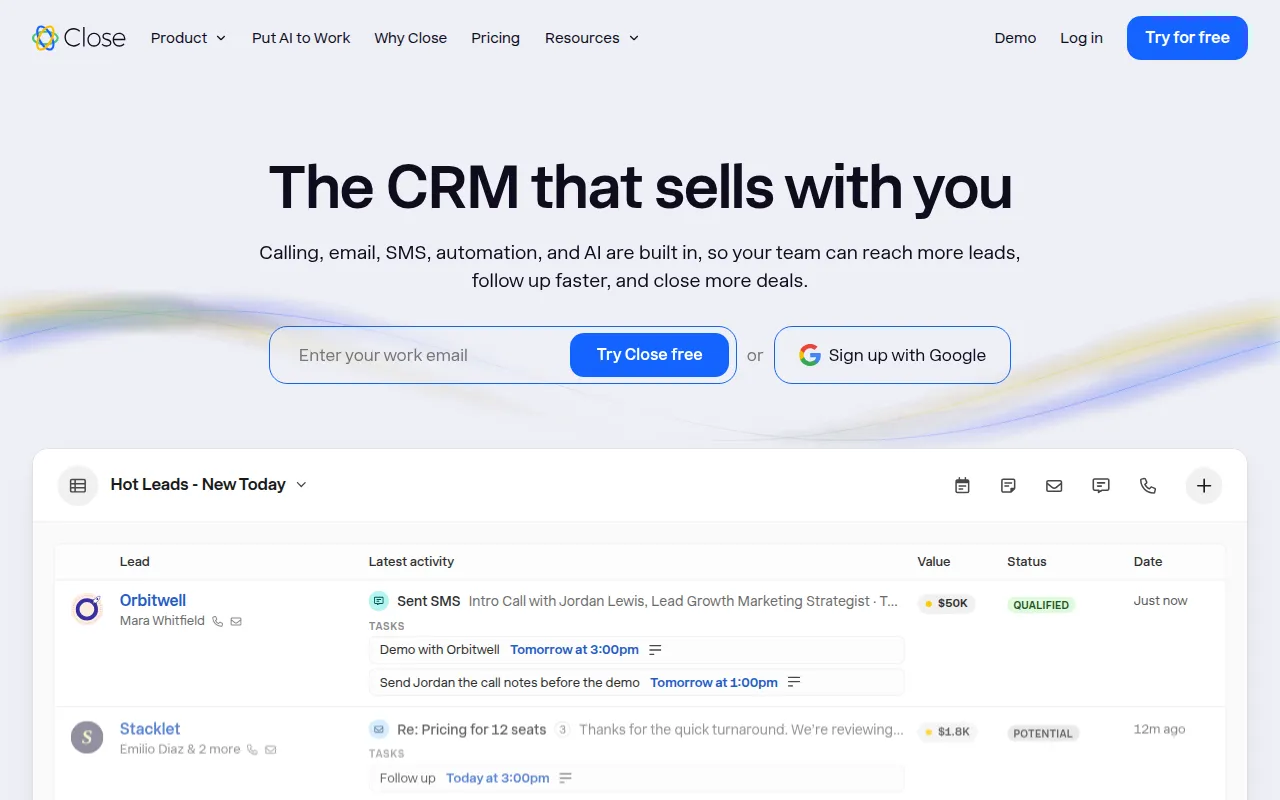
Close has none Close is a CRM with calling, SMS, and email built in, so a rep works from one screen: pipeline, call, text, and follow-up email. Essentials costs $35 per user per month billed annually ($49 billed monthly), Growth $99 ($109 monthly) and Scale $139 ($149 monthly). Even Essentials includes calling, SMS and email sequences, with a single-line dialer. Growth adds the power dialer that steps through a call list automatically, and Scale adds a predictive dialer. The trade-off is price per seat and scope. Skip Close if your pipeline comes from inbound content and referrals rather than outbound calls. You would pay outbound prices for inbound work. Higher tiers add automation, reporting, and the Chloe AI sales agent that answers new leads and books meetings. Skip Close if your team needs a free tier to start. HubSpot CRM has one, but its dialer is a separate add-on rather than built in. Close is the CRM for inside sales teams whose day is the phone. Calling, SMS and email live inside the CRM rather than in a separate dialler, so every call logs automatically with its outcome.
Starting price: Essentials from $35 per user per month, billed annually ($49 billed monthly). Free plan: No, 14-day free trial. Skip if you need a free plan.
 Copper: best for teams that live in Google Workspace
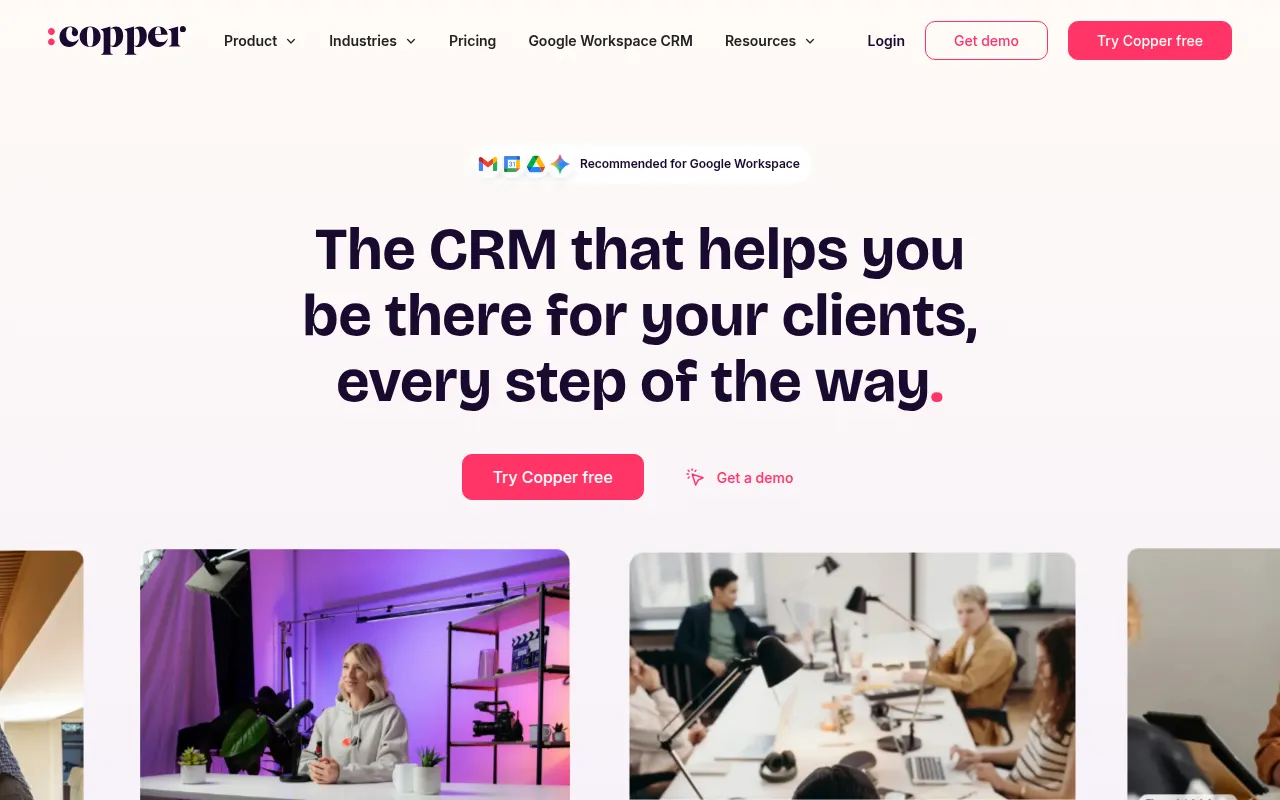
Copper only makes sense for one kind of team, and for that team it fits well. The CRM sits inside Gmail and Google Calendar, so contacts, emails and meetings sync without a separate integration, and Basic caps contacts at 2,500 while Professional raises that to 15,000. The strength is adoption: reps update deals from their inbox instead of opening another tab. Copper requires Google Workspace, and workflow automation, bulk email and reporting only arrive on Professional, which more than doubles the per-seat price. API access also starts at Professional, not Basic. Skip Copper if your team uses Microsoft 365 or a mix of email providers. Without Google Workspace, its main advantage disappears. Copper is a CRM built for Google Workspace, with a Chrome extension that brings it into Gmail and mobile apps for iOS and Android. Copper fits a team that already lives in Gmail, Calendar and Drive, because the CRM meets you inside the inbox instead of asking you to open another app. Adding a contact from an email takes a click, and the mobile app keeps the same records in sync.
Starting price: Basic from $23 per user per month, billed annually. Free plan: No, 14-day free trial. Skip if you need a free plan.
 Freshsales: best for budget-conscious teams needing built-in calling
Freshsales fits inside sales teams that live on the phone, because the dialer ships with the product instead of arriving as a separate contract. Growth costs $9 per user per month billed annually, Pro $39 and Enterprise $59, with a 21-day trial. Growth covers a Kanban pipeline, lifecycle stages, built-in chat, email and phone, email templates, custom fields and basic workflows. Pro adds contact scoring, deal insights, territory management and sales sequences. That combination — a real phone inside a $9 seat — is hard to match. The catch is that the phone and the sequences live on different tiers: sequences need Pro, so a team that buys Growth for the price and then needs automated follow-up pays $39 a seat instead. Freshworks also lists a free edition for up to 3 users on its comparison table, but its pricing page leads with paid plans, so confirm the free edition at signup rather than budgeting around it. Skip Freshsales if you need deep reporting or a large integration library on day one. Its ecosystem is smaller than HubSpot's or Zoho's. Phone, email and chat are built in from Growth.
Starting price: Growth from $9 per user per month, billed annually. Free plan: 21-day free trial. Skip if you need a free plan.
Which Attio alternative fits which need
- Free start with a big ecosystem: HubSpot, Free CRM; Sales Hub Starter from $20 per user per month.
- Simpler pipeline for small teams: Pipedrive, From $14 per user per month (Lite, billed annually).
- A low paid plan with automation: Zoho CRM, Free up to 3 users; Standard from $14 per user per month (billed annually).
- Recruiting-built ATS and CRM: Bullhorn, From $99 per user per month (Starter).
- Outbound teams that live on the phone: Close, Essentials from $35 per user per month, billed annually ($49 billed monthly).
- Teams that live in Google Workspace: Copper, Basic from $23 per user per month, billed annually.
- Budget-conscious teams needing built-in calling: Freshsales, Growth from $9 per user per month, billed annually.
Free plans and trials
Attio: Yes, free for up to 3 users. The alternatives:
- HubSpot: Yes, free for up to 2 users.
- Pipedrive: No free plan; 14-day trial.
- Zoho CRM: Yes, free for up to 3 users.
- Bullhorn: No.
- Close: No, 14-day free trial.
- Copper: No, 14-day free trial.
- Freshsales: 21-day free trial.
What to check before you choose
The same five checks apply to every tool on this page, and they matter more than the starting price.
- Price at your real seat count. Most CRMs charge per user per month, and the plan you need is often one tier above the entry plan. Multiply the price of that tier by the people who will log in, then add any onboarding fee.
- Where the limits sit. Check the caps on contacts, pipelines, custom fields, automations and email sends on the plan you would buy. A cheap plan with one pipeline is not cheap if you run three.
- How it fits the way you sell. A team that sells by phone needs calling and logging. A team that sells by email needs sequences and tracking. Pick the tool built around your main channel.
- Integrations you already depend on. List your email, calendar, accounting and form tools, then confirm each one connects natively. A connection through a third-party automation tool adds cost and one more thing to break.
- Reporting you will actually read. Ask for the pipeline, forecast and activity reports on the plan you would buy. Advanced reporting is one of the most common features held back for higher tiers.
What switching from Attio involves
Moving CRMs is mostly a data job. Export contacts, companies, deals, notes and activity history as CSV files, and check that the new tool can import each one with its links intact, so a deal still points to its contact and company. Custom fields need to be created in the new tool before the import. Automations, email templates and reports do not transfer and have to be rebuilt. Plan for a short overlap in which both systems run, and pick a quiet week in your sales cycle for the cut-over. If you are on an annual contract with Attio, check the renewal date and notice period first.
Mistakes to avoid
Do not switch on headline price alone. The starting prices here use different units (per user, per contact, per site), so price each alternative at your own usage, and check which features sit on the plan you would actually buy.
Quick answers
What is the cheapest alternative here?
Freshsales has the lowest published starting price of the 7 options here that charge per user per month: Growth from $9 per user per month, billed annually. HubSpot and Zoho CRM also have a free plan. Checked 13 November 2026.
HubSpot vs Pipedrive: which one should you choose?
HubSpot is the better fit for free start with a big ecosystem. Pipedrive is the better fit for simpler pipeline for small teams. HubSpot pricing: Free CRM; Sales Hub Starter from $20 per user per month. Pipedrive pricing: From $14 per user per month (Lite, billed annually).
Which of these alternatives has a free plan?
HubSpot and Zoho CRM offer a free plan. Pipedrive, Close, Copper and Freshsales offer a free trial instead. Checked 13 November 2026.
How much does HubSpot cost?
HubSpot pricing: Free CRM; Sales Hub Starter from $20 per user per month. Free plan: Yes, free for up to 2 users. Checked 13 November 2026 against the vendor's own page.
How much does Pipedrive cost?
Pipedrive pricing: From $14 per user per month (Lite, billed annually). Free plan: No free plan; 14-day trial. Checked 13 November 2026 against the vendor's own page.
How much does Zoho CRM cost?
Zoho CRM pricing: Free up to 3 users; Standard from $14 per user per month (billed annually). Free plan: Yes, free for up to 3 users. Checked 13 November 2026 against the vendor's own page.
Which alternative is best for a low paid plan with automation?
Zoho CRM. Pricing: Free up to 3 users; Standard from $14 per user per month (billed annually). Free plan: Yes, free for up to 3 users. Skip if you need more than 3 users on the free plan.
Which alternative is best for recruiting-built ATS and CRM?
Bullhorn. Pricing: From $99 per user per month (Starter). Skip if your budget is under $99 a month.
Which alternative is best for outbound teams that live on the phone?
Close. Pricing: Essentials from $35 per user per month, billed annually ($49 billed monthly). Free plan: No, 14-day free trial. Skip if you need a free plan.
What is the catch with the HubSpot free plan?
The free plan covers: free for up to 2 users. Paid pricing: Free CRM; Sales Hub Starter from $20 per user per month. Checked 13 November 2026.
Common questions
What is the best alternative to Attio?
It depends on what you need. HubSpot suits free start with a big ecosystem, Pipedrive suits simpler pipeline for small teams, and Zoho CRM suits a low paid plan with automation.
How much does Attio cost?
Attio pricing: $100 per month (Pro workspace, billed annually) plus $79 per extra user. Free plan: Yes, free for up to 3 users. Checked 2026-11-13 against the vendor's page.
Is there a free alternative to Attio?
Yes. HubSpot and Zoho CRM have a free plan. Check the limits before you rely on one.
How were these Attio alternatives chosen?
They are the products Adziq already compares alongside Attio, with prices read from each vendor's pricing page.
Did Adziq test these products?
No. This comparison uses each vendor's published pricing and documentation, checked on the dates shown.
Sources
- Attio pricing
- HubSpot pricing
- Pipedrive pricing
- Zoho CRM pricing
- Bullhorn pricing
- Close pricing
- Copper pricing
- Freshsales pricing
How we research, check prices and label sponsored listings: editorial policy. To feature a product or agency, ask about a listing.